
Selling your SaaS is not one big decision. It is a hundred small ones, made weeks before your listing ever goes live.
Most founders start preparing only when they are already burned out and want out. That is exactly backwards. The businesses that close fastest and at the best prices are the ones whose owners did the quiet prep work before the market ever saw them.
Here is a practical, eight-week playbook to make your SaaS sellable. Not perfect. Sellable.
Why preparation pays for itself
Buyers pay for certainty. Every gap in your financials, every account registered in your personal name, every process that exists only in your head becomes a question in due diligence. And every unanswered question becomes a discount, or worse, a walked-away deal.
Preparation is leverage. A well-documented business attracts more serious buyers, and more serious buyers competing for one deal is the only thing that reliably pushes prices up.
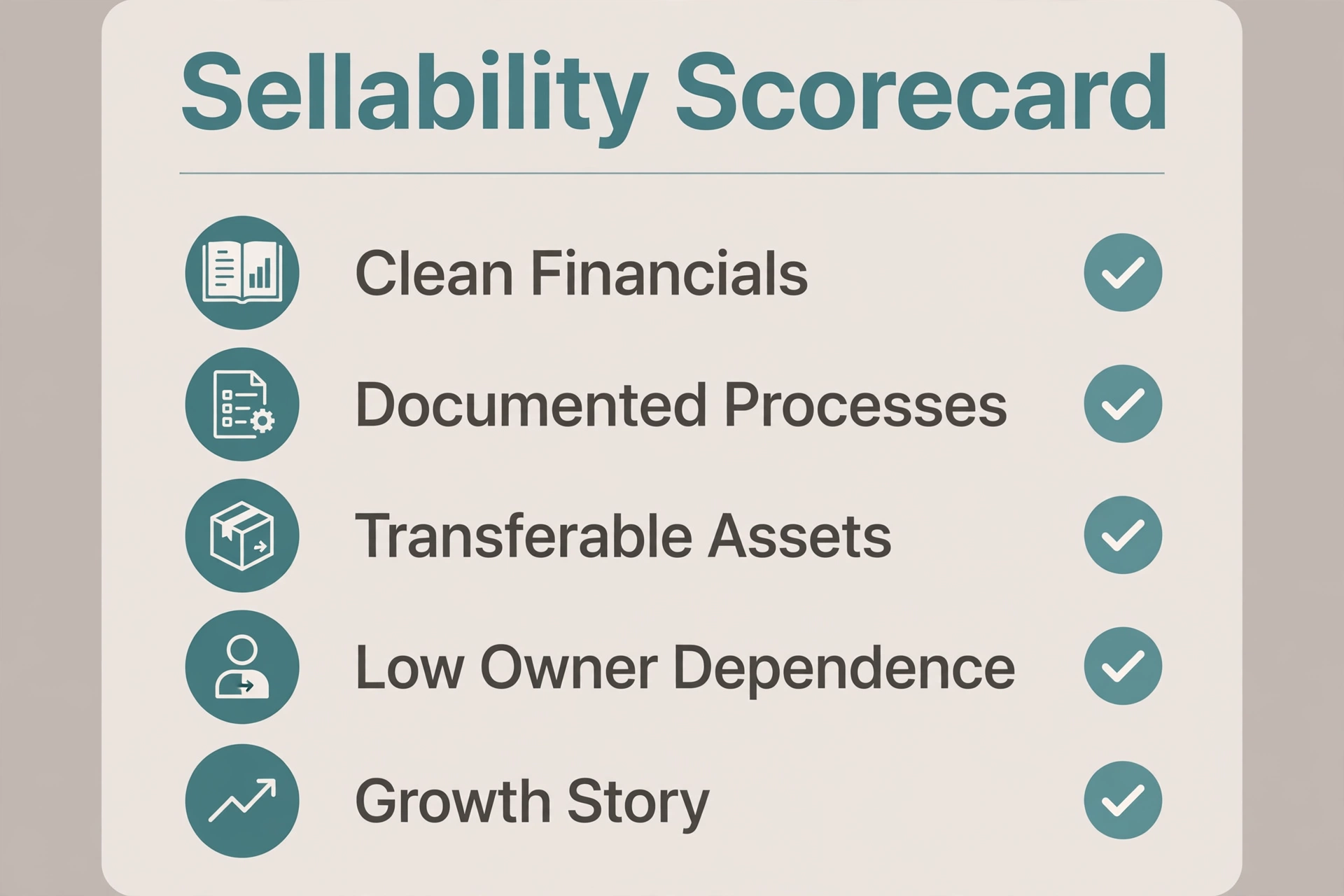
1. Get your financials buyer-ready
This is the highest-leverage work you can do, and most founders skip it. Buyers will scrutinize your numbers harder than anyone ever has, so make them easy to trust.
- Separate business from personal. If business expenses run through your personal card, fix it now. Every mixed transaction is a question you will have to answer later.
- Produce 12 months of monthly P&L statements. Annual totals are not enough. Buyers want to see the trend, the seasonality, the bad months and the recovery.
- Know your real seller discretionary earnings. Add back owner salary, one-time expenses, and personal items run through the business. Present a clean, defensible SDE figure.
- Reconcile revenue to the source of truth. Your payment processor dashboard, your app database, and your books should tell the same story. If they do not, fix the gap before a buyer finds it.
“The books were so clean I stopped double-checking them by week two.” That is what one buyer said about a deal that closed diligence in 19 days. Clean financials are a speed advantage.
2. Document everything that lives in your head
Your business is not sellable if you are the manual. Write down the things only you know:
- Deploy and ops runbooks. How the app deploys, how backups run, who hosts what, and what to do when the site goes down at 2 a.m.
- Customer support playbook. The 20 most common tickets and exactly how you answer them.
- Sales and marketing rhythm. Where customers come from, what a week of growth work looks like, which channels you spend on and why.
- Key relationships. Your freelancers, your API partners, the contact at your registrar who fixes DNS issues. Hand off the introductions while you are still around.
3. Untangle the tech and accounts
This one quietly kills more small deals than price disagreements do. Before you list, make sure every asset that makes the business run can actually change hands.
- Move everything into business-owned accounts. Domains, hosting, email, analytics, ad accounts, social profiles. If it is registered in your personal Gmail, transfer it now.
- Inventory every third-party service. List API keys, webhooks, integrations, and cron jobs. Note which ones are tied to your identity and re-key them.
- Check your licenses. Confirm that paid tools, themes, templates, and code libraries are licensed to the business and transferable. Copyleft open-source licenses deserve a second look.
- Prepare a clean code handoff. Up-to-date README, environment variables documented, migrations and seed data working from scratch.
4. Reduce owner dependence
The test is simple: if you disappeared for a month, would revenue hold? Buyers price risk, and founder dependence is the biggest risk of all.
- Step back from support and sales gradually. Route tickets and leads through systems, not through you.
- Give someone else the keys. A contractor or part-time operator who can keep the lights on makes the business feel real and durable.
- Offer a reasonable transition period. 30 to 60 days of seller support is standard for small deals, and it costs far less than the discount a nervous buyer will demand.
5. Clean up legal and ownership loose ends
- Confirm you own the IP. If a contractor wrote core code, make sure there is a signed IP assignment. Verbal agreements do not transfer.
- Resolve cap table questions. Co-founders, early partners, anyone with an equity claim needs to be on the same page before a buyer asks.
- Decide your deal structure early. Most small online business sales are asset sales, where the buyer purchases the assets (code, domain, customers, brand) rather than the company itself. Asset sales are simpler and cleaner for the buyer, and knowing this up front avoids weeks of renegotiation.
6. Tell a growth story, not just a history
Buyers pay for the future, not the past. Give them reasons to believe the best years are ahead.
- List the three easiest growth levers. The features you never built, the channels you never tried, the pricing test you never ran. Buyers love a roadmap they can execute.
- Show momentum. Even small wins in the last 90 days matter more than last year’s peak.
- Be honest about the flat spots. Naming the weakness yourself builds trust and lets you frame it as the buyer’s opportunity.
7. Build your data room before you list
Once you list, interested buyers will move fast. Have a folder ready so you can answer within hours, not days:
- Last 12 months of financials
- Traffic and analytics exports
- Customer and revenue breakdowns, anonymized where needed
- Contracts, licenses, and IP assignments
- Your transfer checklist and runbooks
- A signed NDA template for serious inquiries
The bottom line
Preparing your SaaS for sale is mostly unglamorous work: reconciling books, writing docs, transferring accounts. But it is the work that separates a listing that languishes from one that closes.
If you do this prep, listing your business takes an afternoon. If you do not, every week of delay is a week a buyer spends finding reasons to say no.
Ready to put a sellable business in front of real buyers? Browse current deals on Startexus to see what the market is paying, or list your business for sale and start the conversation today.
Tags
- online business
- due diligence
- saas
- ai
- growth