
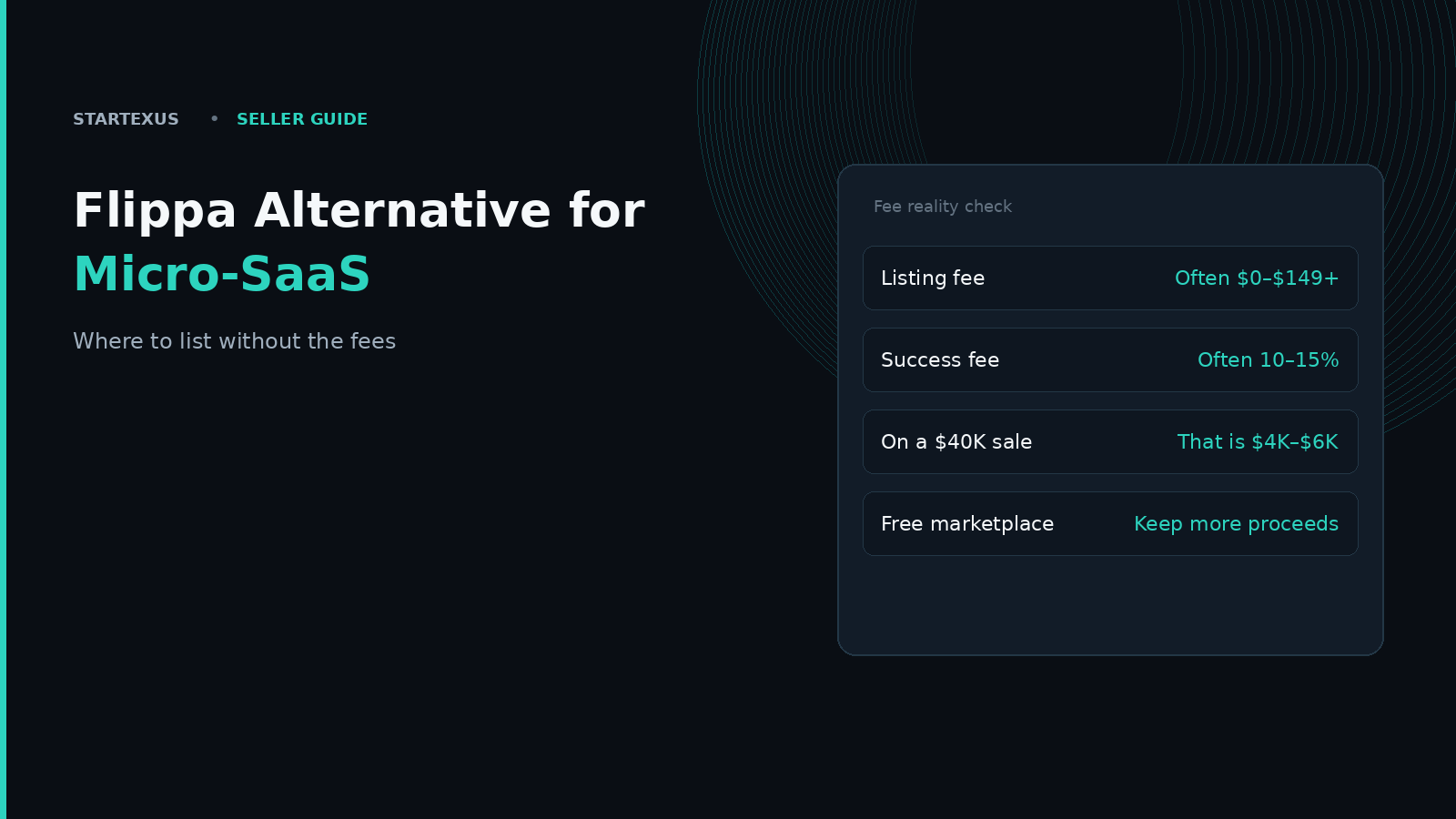
Flippa works for some deals. For many micro-SaaS sellers, the fees matter more than the brand name.
A $40,000 product that pays 10 to 15 percent at closing is giving away $4,000 to $6,000 before you count listing extras. On a larger exit that cut is noise. On a side project, it is a month of runway.
This is the guide I would hand a friend choosing where to list. Honest comparison, no hype.
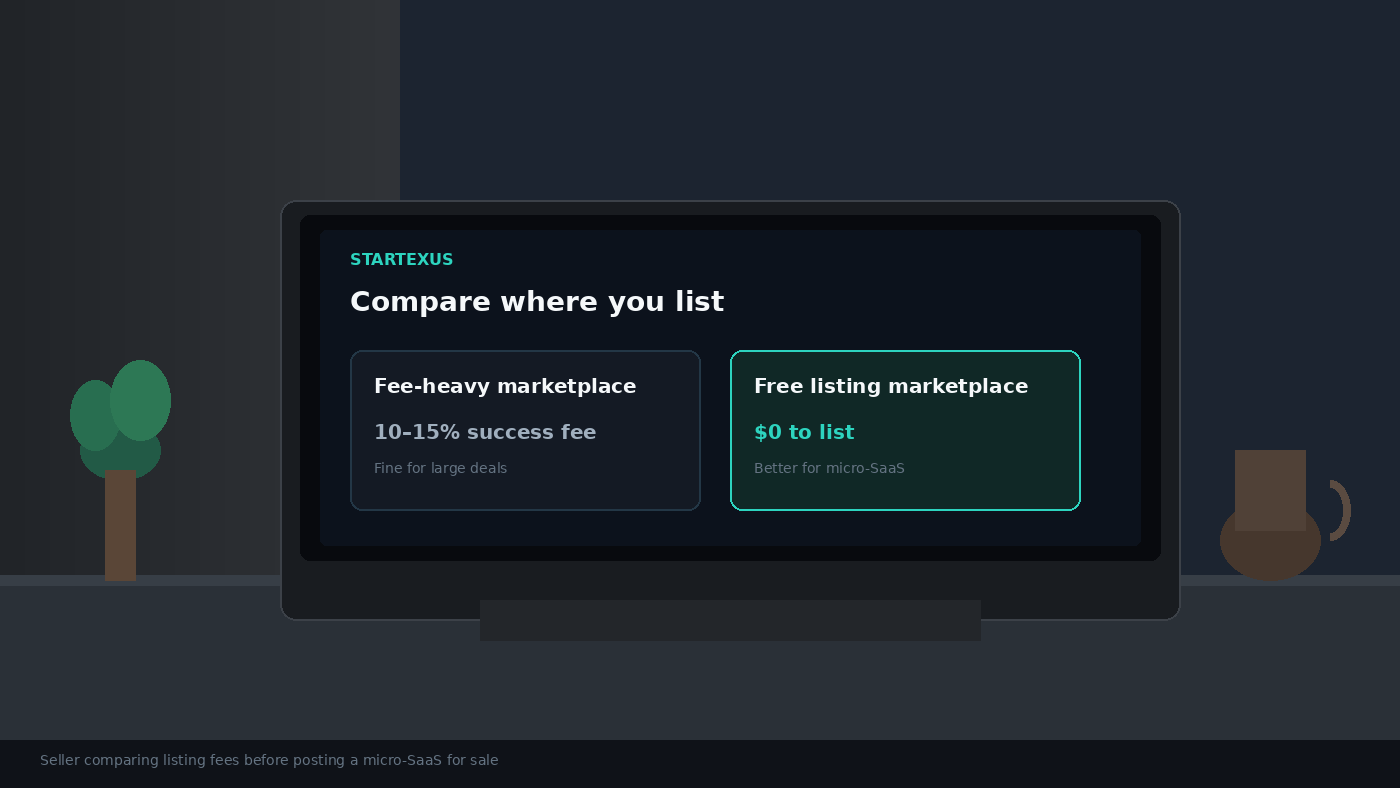
Why fees hit micro-SaaS harder
Marketplace economics are not the same at every price point. Small deals feel percentage fees more sharply.
- Thin proceeds. A micro-SaaS often sells in the $5K to $100K range. A double-digit success fee takes a real slice.
- Buyer pool vs cost. Paying for reach only helps if those buyers close. Exposure without a sale still costs you.
- Listing friction. Paid boosts, featured placements and verification upsells add up before anyone makes an offer.
- Your time is already spent. You built the product. The marketplace should not recreate a broker bill by default.
1. Free listing marketplaces
You are not hunting for a Flippa clone. You want low or zero listing cost, buyers who understand MRR and churn, clear price and revenue on the card, and a way for founders to claim and talk without auction noise.
Start with a place that does not charge you to appear. You keep options open while you learn what buyers ask.
- StartExus. A free marketplace for online businesses from $5K to $1M, with a SaaS browse page so buyers filter by category. Founders can claim listings at no cost.
- Price and revenue on the card. Buyers compare multiples without a sales call first. That filters tire-kickers early.
- Curated watching lists. Deals we're watching helps calibrate what fair looks like for similar products.
- Use a valuation anchor. Before you post, run numbers through the StartExus valuation guide so your ask is defensible.
Worked example (illustrative numbers only): You sell at $48,000. A 12.5 percent success fee is $6,000. Listing free and closing at the same price leaves that $6,000 with you. If a paid marketplace truly brings a better buyer or a higher close, the fee can be worth it. If not, you paid for a logo.
2. Curated buyer marketplaces
Sites in the Acquire.com mold focus on vetted startups and often a more selective buyer base. They are a Flippa alternative of a different kind: less auction floor, more curated matchmaking.
- Higher ticket bias. Many curated platforms shine above the micro-SaaS band. Check whether your MRR fits their typical deals.
- Process tradeoffs. Expect applications, review queues and stricter packaging. That can help or slow you down.
- Fee structures vary. Some charge sellers, some charge buyers, some both. Read the current terms before you assume "free."
- Use them when the fit is clear. Strong growth, clean books and a price that matches their buyer pool.
3. Founder communities
Indie Hackers, Reddit and X are where many micro-SaaS deals still start. Zero platform cut. More of the work lands on you.
- Direct founder buyers. People who already run small products and know what transfer looks like.
- Less structure. You write the post, answer the same diligence questions repeatedly and sort serious interest from noise.
- Proof still matters. Live processor access beats screenshots, even in a forum thread.
- Do not spray and pray. One clear listing with numbers beats five vague "DM me" posts.
When Flippa still makes sense
An alternative is not a rejection. Flippa remains useful in specific cases.
- You want broad auction-style reach. Some categories and price bands perform better with that format.
- Your deal is large enough. Percentage fees hurt less when the absolute exit is high.
- You need their tooling. Escrow workflows, verification products or buyer traffic you cannot easily replicate.
- You are comparing apples to apples. Run Flippa net proceeds against a free listing plus your own outreach time.
How to choose where to list
Decide with a short worksheet, not a brand preference.
Pro tip: If you cannot explain your asking price in one sentence using MRR or ARR and a multiple, rewrite the listing before you pay for any boost. Buyers leave when the number feels invented.
- Write your all-in ask. Price, earnout, transition weeks. Know the floor you will accept.
- Estimate net proceeds. Subtract every fee under each option, including boosts.
- Match the buyer type. Consumer side projects, B2B micro-SaaS and content sites attract different shoppers.
- List in more than one place when allowed. Free listings first. Add a paid channel only if the math still works.
- Prepare diligence assets. Trailing twelve months of revenue, churn, costs and a transfer checklist ready on day one.
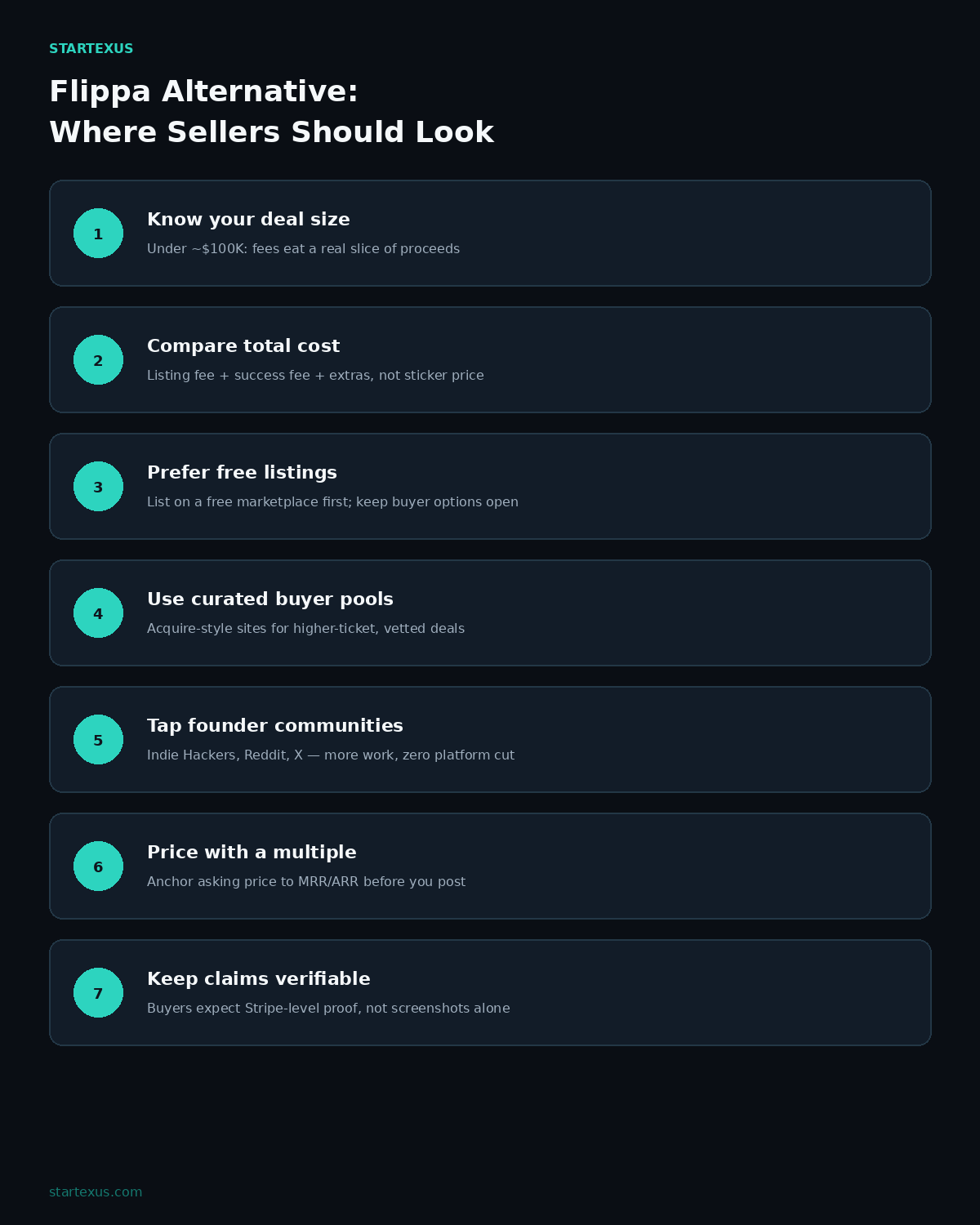
Common mistakes
- Listing on the first big brand name without calculating net proceeds.
- Setting an ask with no MRR or ARR context buyers can verify.
- Paying for featured placement before the listing copy is clear.
- Ignoring free marketplaces because they feel "newer" than Flippa.
- Ghosting early diligence questions and killing momentum.
Your listing decision checklist
- Deal size and minimum acceptable net written down.
- Fee comparison completed for at least two channels.
- Asking price anchored to revenue with a multiple you can defend.
- Free marketplace listing live (or ready) before paid boosts.
- Revenue proof and transfer list prepared for the first serious buyer.
The bottom line
A Flippa alternative for micro-SaaS is usually a free or lower-friction marketplace plus clear numbers, not a louder auction.
Pick the channel that maximizes what you keep and the quality of buyers who can close. The brand on the listing page matters less than the net and the transfer.
Browse current SaaS deals on StartExus, check the valuation guide, or list your business for sale for free.
Tags
- online business
- valuation
- saas
- ai
- growth
- startup