Buying a micro-SaaS under $50K is the fastest way to own a software business. It is also the fastest way to inherit someone else's half-finished side project.
The difference is rarely luck. It is process. First-time buyers who get burned usually skipped a step they did not know existed.
This is the guide I would hand a friend buying their first one. Budget to day 90, no hype.
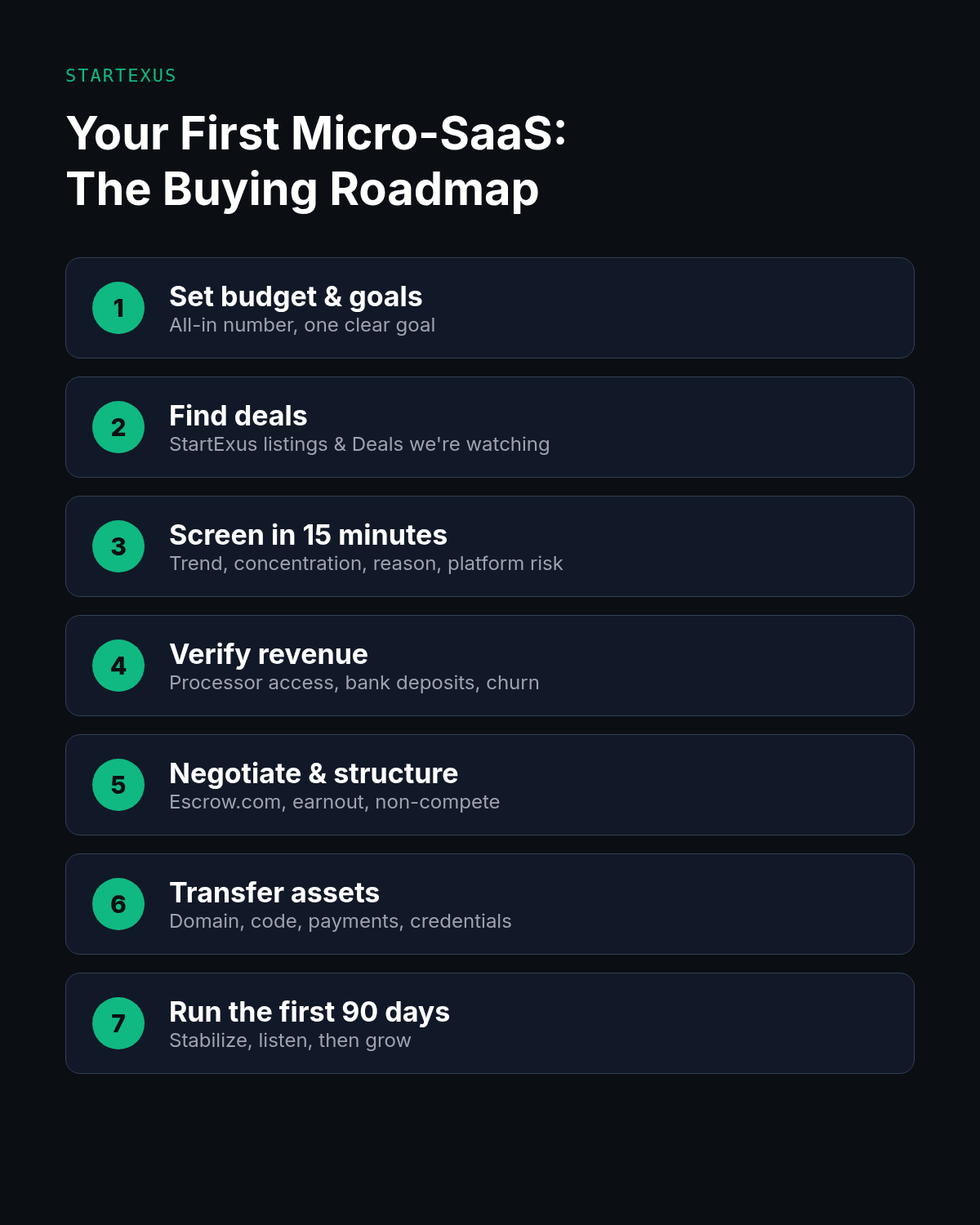
1. Set your budget and goals
Decide what you are buying before you look at anything. Otherwise every listing looks like an opportunity.
- Set an all-in number. Purchase price plus escrow fees, tooling, a contractor buffer and a few months of runway. If $40K is your ceiling, your offer ceiling is lower.
- Pick one goal. Side income, a learning project or a platform to grow. Each points to a different kind of deal.
- Be honest about your hours. A product that needs 20 hours a week is a job, not an asset.
- Know your skill gap. Non-technical buyers need simpler stacks or a developer lined up before closing.
2. Where to find deals
Good small deals move quickly. Look in several places and check them often.
- StartExus listings. A free marketplace for online businesses from $5K to $1M, mostly SaaS. Filter by price and revenue.
- StartExus Deals we're watching. Our curated picks of listings worth a closer look. A good place to calibrate what "fair" looks like.
- Founder communities. Indie hacker forums, Reddit and X posts from founders who want out. Expect less structure and more homework.
- Direct outreach. Stalled products you already use. Some owners will sell when asked politely.
3. What is realistic under $50K
Set expectations early and you will make better offers. At this price you are usually buying a small, owner-run product, not a team.
- Modest MRR. Typically a few hundred to a few thousand dollars a month, depending on the MRR multiple and growth.
- One-person operations. The seller is often the developer, support desk and marketer.
- Rough edges. Thin documentation, older code, a niche audience. That is normal. Price it in.
- Real upside. Many small products are under-marketed. Fixing distribution is often the play.
Worked example (illustrative numbers only): A product at $1,200 MRR with $200 in monthly costs earns $1,000 a month. At an example multiple of 36x monthly profit, that is $36,000. Whether 36x is fair depends on churn, growth and owner dependence. Our valuation guide covers how to judge that.
4. Screen deals in 15 minutes
Most listings should be a fast no. Save your diligence time for the few that pass.
- Revenue trend. Flat or growing over 12 months. Steady decline is a red flag, not a discount.
- Concentration. No single customer making up a large share of revenue.
- Why selling. A clear, believable reason. Vague answers deserve follow-up.
- Platform risk. Products built on one API or app store can disappear overnight.
5. Verify revenue
Never buy on screenshots. This is where first deals go wrong most often.
- Read-only processor access. Look at Stripe or Paddle directly, ideally on a live call.
- Match to bank deposits. Processor revenue should show up in the bank account.
- Check churn and refunds. Gross MRR hides cancellations. Look at net figures month by month.
- Go deeper with a checklist. Our buyer due diligence checklist walks through the full process.
6. Negotiate and structure the deal
Price matters. Structure often matters more. It decides who carries the risk.
- Use escrow. Escrow.com holds your funds until assets transfer and you confirm. Do not wire money directly to a stranger.
- Consider an earnout. Pay part of the price later, tied to revenue holding up. It aligns incentives when numbers are uncertain.
- Agree on transition support. A set number of weeks of seller help, written into the agreement.
- Add a non-compete. The seller should not relaunch the same product next month.
Test question: if revenue dropped 30 percent the month after closing, who would absorb that loss? If the answer is only you, rethink the structure.
7. Transfer checklist
Assets move one by one. Make a list and tick it off before releasing funds.
- Domain and DNS. Moved to your registrar account.
- Code and hosting. Repo ownership, cloud accounts and deploy keys transferred.
- Payments. Stripe account or subscriptions migrated with no billing gap.
- Email and support. Inboxes, help desk, transactional email provider.
- Credentials rotated. Change every password and API key after handover.
8. Your first 90 days
Do not rebuild anything in month one. Learn the business first.
- Days 1-30: stabilize. Keep it running, answer support fast, watch churn.
- Days 31-60: listen. Talk to customers. Find out why they pay and what annoys them.
- Days 61-90: grow. One focused bet on pricing, SEO or a key feature. Measure it.
Common mistakes
- Trusting screenshots instead of live processor data.
- Spending the whole budget on the purchase, with nothing left for fixes.
- Skipping escrow to save a fee.
- Buying a tech stack nobody on your side can maintain.
- Rewriting the product before understanding the customers.
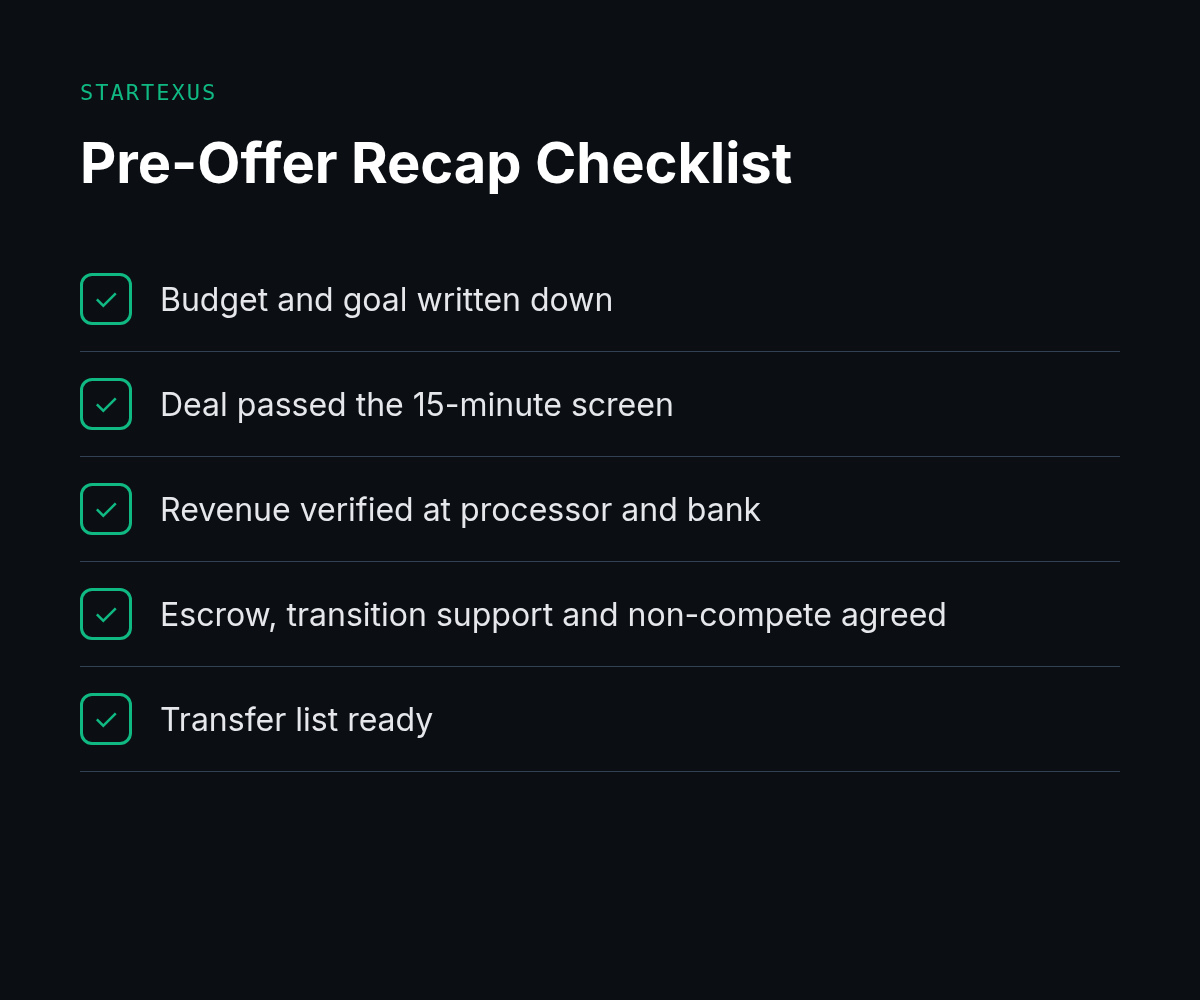
Your pre-offer recap checklist
- Budget and goal written down.
- Deal passed the 15-minute screen.
- Revenue verified at the processor and the bank.
- Escrow, transition support and non-compete agreed.
- Transfer list ready.
The bottom line
Your first micro-SaaS should be boring to buy. Clear numbers, a simple transfer and a structure that protects you.
Get the process right on a small deal and the next one gets easier.
Browse current deals on StartExus, including the Deals we're watching, or list your business for sale for free.
Tags
- online business
- due diligence
- valuation
- saas
- ai
- growth