
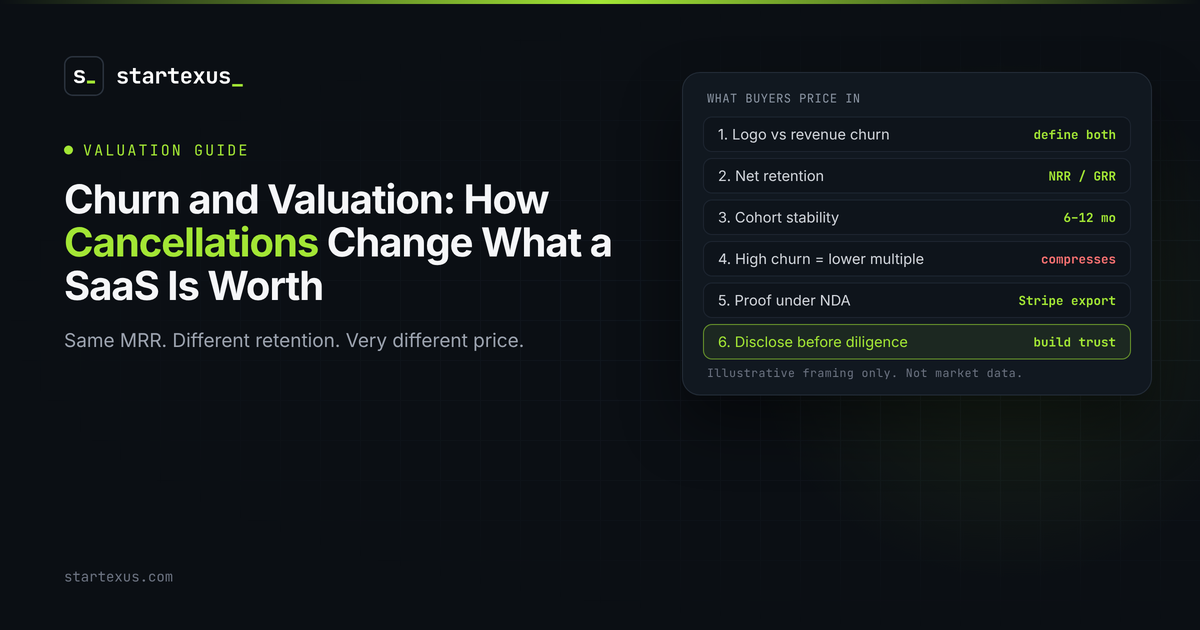
Two SaaS products can show the same $2,000 MRR and be worth very different amounts. The difference is usually churn.
Buyers do not pay for a screenshot of last month's Stripe balance. They pay for cash flow that survives the next round of cancellations.
This is the churn-and-valuation playbook I would hand a friend before they price a micro-SaaS or bid on one. The dollar figures and multiples below are illustrative examples, not market data and not a real listing.
Why churn sits inside the multiple
MRR is a snapshot. Churn is the leak rate. A buyer who pays 24x on $2,000 MRR is buying about two years of that run-rate if nothing changes. When customers leave every month, the buyer is also buying replacement work. That work shows up as a lower multiple, earnout pressure, or a walk-away.
1. Separate logo churn from revenue churn
One number is not enough. Buyers want both definitions and the period you used.
- Logo churn. Paying customers who cancel in a month, divided by customers at the start of the month. Clean and easy to game if you ignore downgrades.
- Revenue churn. Recurring dollars lost to cancels and downgrades, before expansion. This is closer to what a buyer cares about.
- Say the window. Trailing three months vs trailing twelve months can tell different stories. State which one you are showing.
Test question buyers ask: "Is your 3% churn logo or revenue, and is it monthly?" If the seller cannot answer in one sentence, diligence gets longer.
2. Add net retention, not just cancellations
Gross retention shows how much of the base you keep without upsells. Net retention folds expansion back in. Both matter when you value a small SaaS.
- GRR (gross revenue retention). Base recurring revenue kept after cancels and downgrades, ignoring expansion. Under 100% by definition.
- NRR (net revenue retention). Same base, but expansion and upgrades count. Above 100% means growth from the existing book.
- Why buyers care. A product with 5% monthly logo churn and strong expansion can still look durable. A product with 5% logo churn and no expansion is a leaky bucket.
3. Demand trailing cohorts, not a single good month
A polished MRR chart can hide a soft book. Cohorts show whether recent customers stick or bounce.
- Ask for 6–12 months. Monthly logo and revenue churn side by side. One soft month is noise. A trend is a thesis.
- Watch new-cohort decay. If early cancels spike after a launch or paid campaign, the growth is expensive to keep.
- Separate refunds. Same-month refunds are not the same as a customer who stayed six months and left.
4. Watch how multiples compress when churn rises
Same MRR. Different retention. Different price. That is the whole game.
- Low churn supports a higher multiple. Durable cash flow needs less replacement work after close.
- High churn compresses the ask. The buyer is funding a treadmill. They pay less up front, push an earnout, or pass.
- Concentration makes it worse. If the top customer is 25% of MRR and churn is already elevated, one cancel rewrites the model fast.
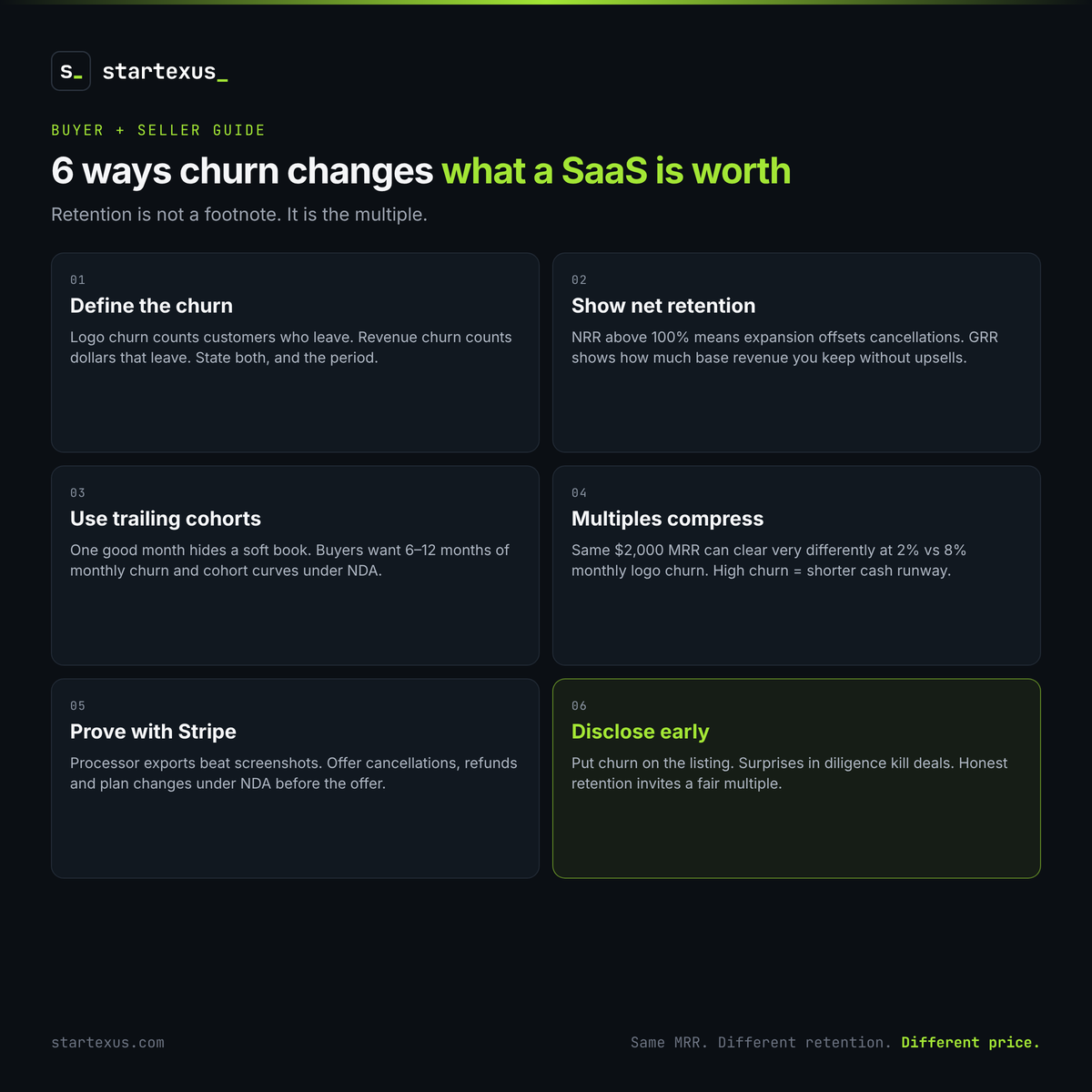
Worked example (illustrative, not a real listing or survey): two products both show $2,000 MRR. Product A runs about 2% monthly logo churn with NRR around 108%. An illustrative ask near 28x is about $56,000. Product B runs about 8% monthly logo churn with NRR around 88%. An illustrative ask nearer 16x is about $32,000. Same headline MRR. Roughly $24,000 of gap that is mostly retention.
5. Prove churn with Stripe, not screenshots
Screenshots of a dashboard are a start. Processor exports close deals.
- Offer the export under NDA. Cancellations, plan changes, refunds and MRR by month. Say that on the listing so serious buyers know you are ready.
- Match the story to the file. If the listing says 3% monthly revenue churn, the Stripe rows should support it without heroic filters.
- Explain one-offs. Annual prepays, paused subscriptions and goodwill credits confuse casual readers. Label them before diligence starts.
6. Disclose early if you are selling
Hiding churn does not raise the price. It raises the chance the deal dies in week two.
- Put a clean churn line on the listing. Logo and revenue, period, and whether NRR is above or below 100%.
- Own the narrative. "We cut a noisy paid channel; logo churn fell from 7% to 3.5% over six months" is better than silence.
- Price the retention you can defend. A lower multiple on honest numbers beats a fantasy multiple that collapses under a Stripe CSV.
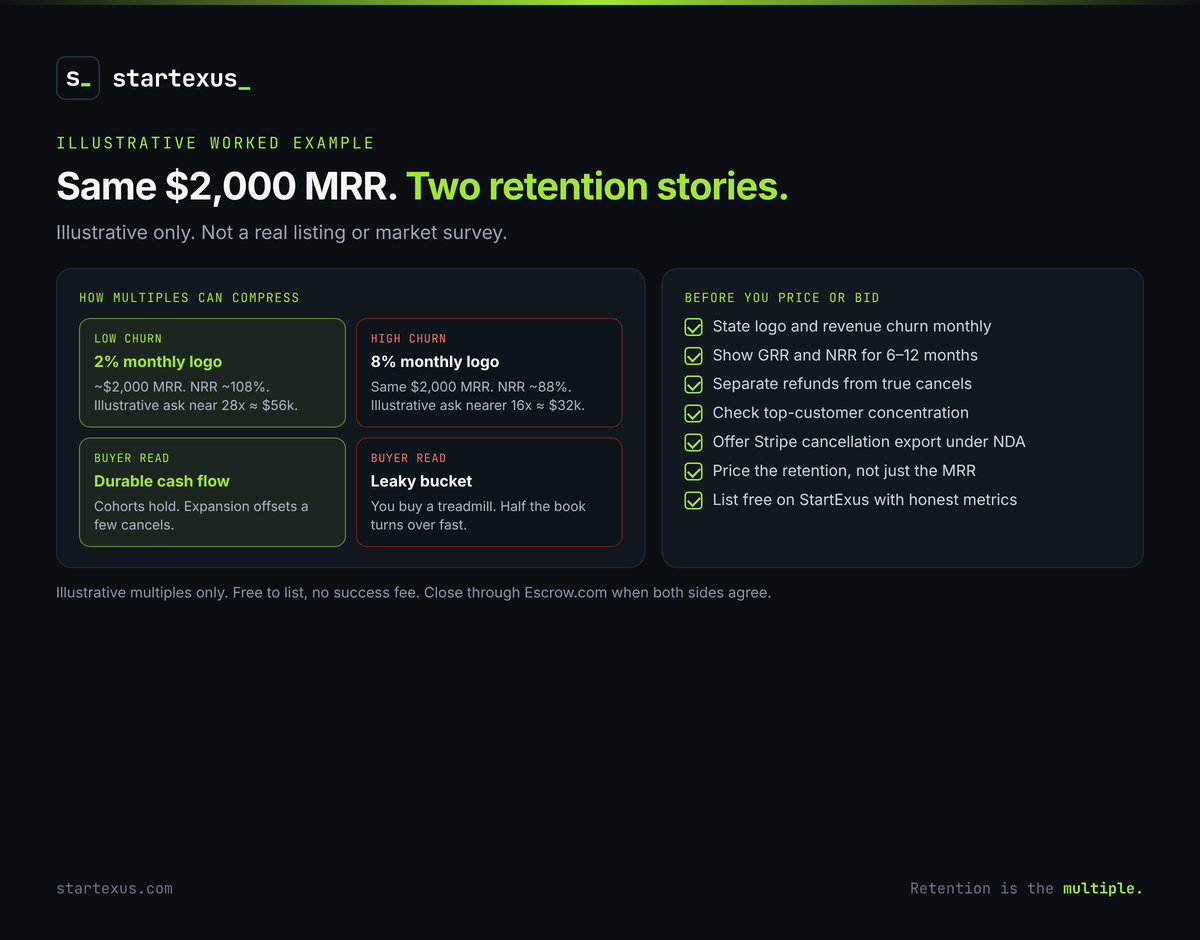
Your 20-minute churn check before you price or bid
- Write logo churn and revenue churn for the last six months, monthly.
- Compute or request GRR and NRR over the same window.
- Pull (or request) a Stripe cancellation and plan-change export under NDA.
- Separate refunds and same-month cancels from true retained churn.
- Check top-customer share of MRR.
- Re-run the ask or bid on retention, not on a single MRR screenshot.
- If you are selling, put the churn line on the public listing before buyers ask.
- List free on StartExus, get human review, and plan to close through Escrow.com when you agree terms.
The bottom line
Churn is not a side metric. It is how buyers translate MRR into a price. Define logo vs revenue churn. Show net retention. Bring cohorts and Stripe proof. Expect multiples to compress when the bucket leaks.
Price the cash flow that survives next month's cancellations.
Ready to compare deals? Browse SaaS businesses for sale on StartExus, or list your SaaS for free: no success fee, human review, and Escrow.com recommended at close.
Tags
- valuation
- saas
- ai
- roi
- growth