
Buyers do not buy your weekend story. They buy a transferable cash-flowing asset with numbers they can trust. Your listing is the first diligence pass, not a pitch deck for friends.
Most side-project listings fail for the same reason. They read like a resume: long origin story, soft metrics, pretty screenshots that hide the churn, and a price that only makes sense if you ignore the peers.
This is the listing playbook I would hand a friend before they put a micro-SaaS or other small online business for sale. The dollar figures below are illustrative examples, not real listings.
Why the listing is half the sale
A buyer decides in under a minute whether to message you. If the headline is vague, the MRR is unexplained, or the screenshots look staged, they bounce. Clear listings get NDA clicks. Fuzzy ones sit.
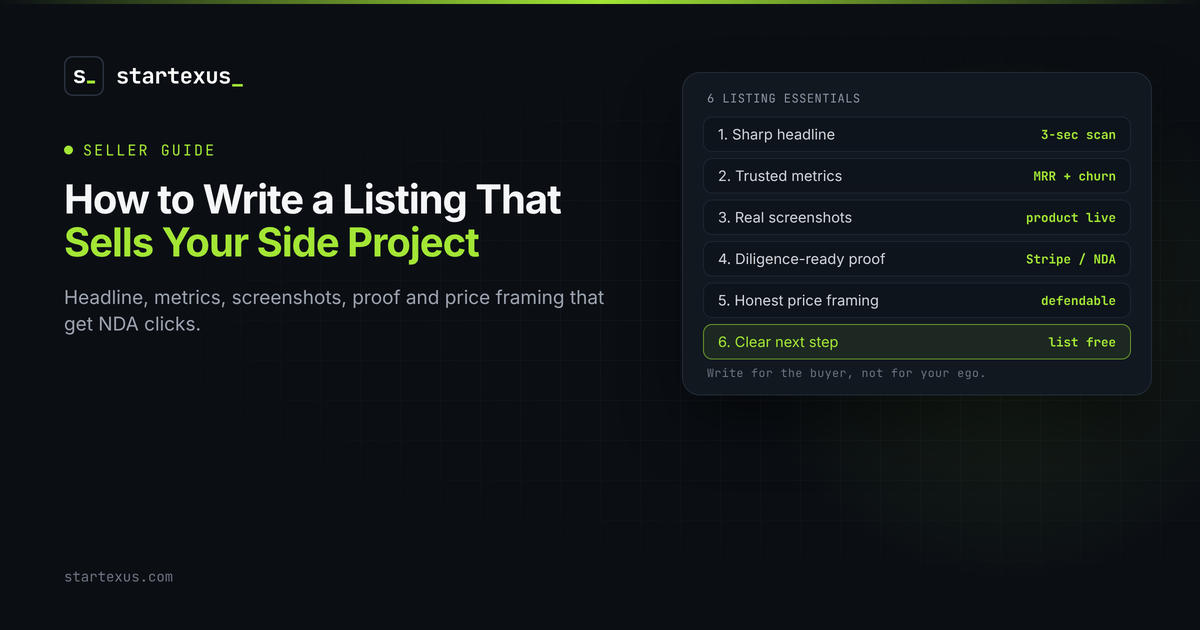
1. Write a headline buyers can scan in three seconds
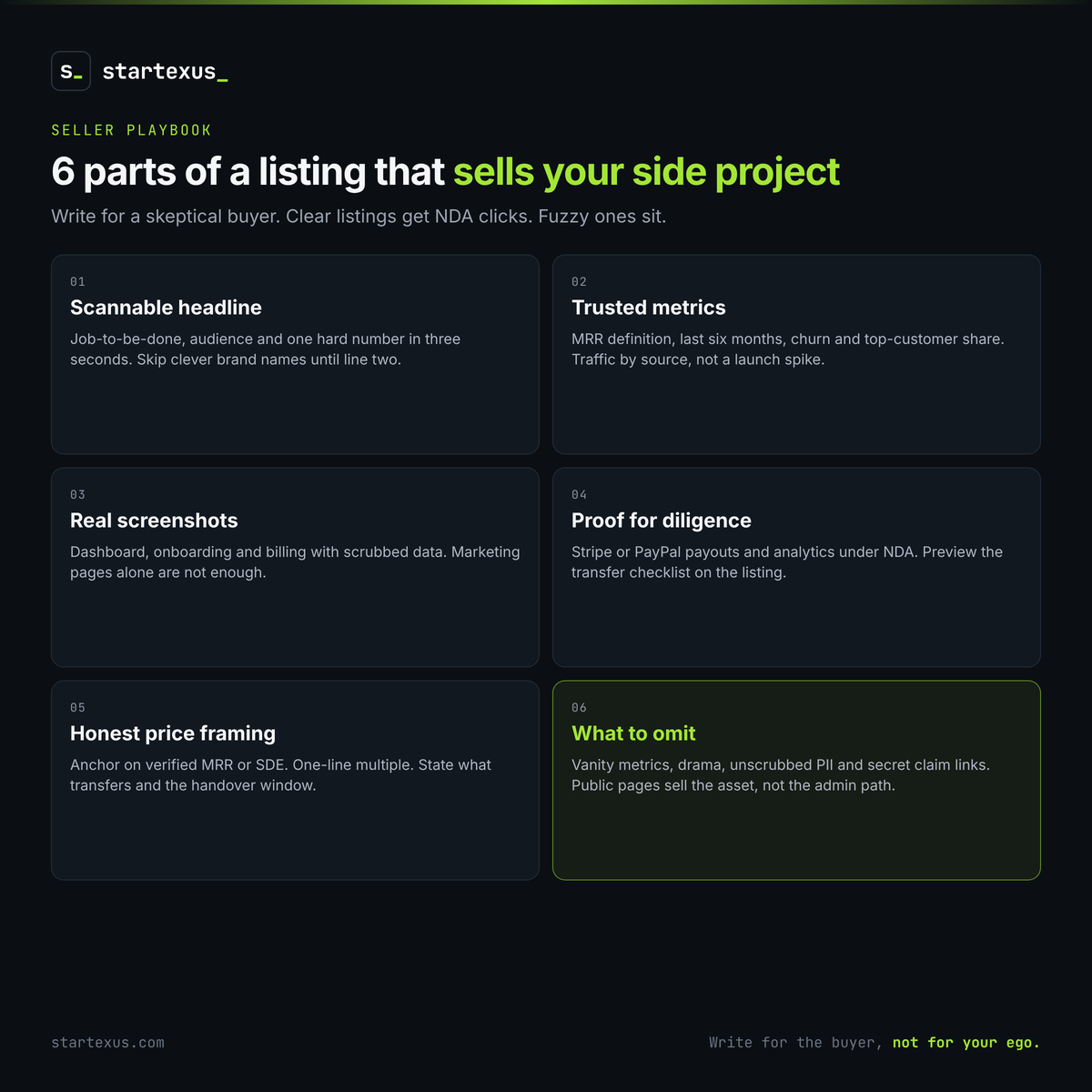
Lead with what the product does, who it is for, and one hard number. Skip clever brand names until the second line.
- Name the job, not the brand. "Calendar booking tool for freelancers, $1,850 MRR" beats "AetherFlow: the future of scheduling."
- Put a metric in the title when you can. MRR, trailing twelve-month revenue, or paying customers. Vague "growing SaaS" headlines get skipped.
- One sentence of scope. Add who it serves and what transfers. Example: "B2B Notion template marketplace. 420 paying buyers. Domain, Stripe and Gumroad included."
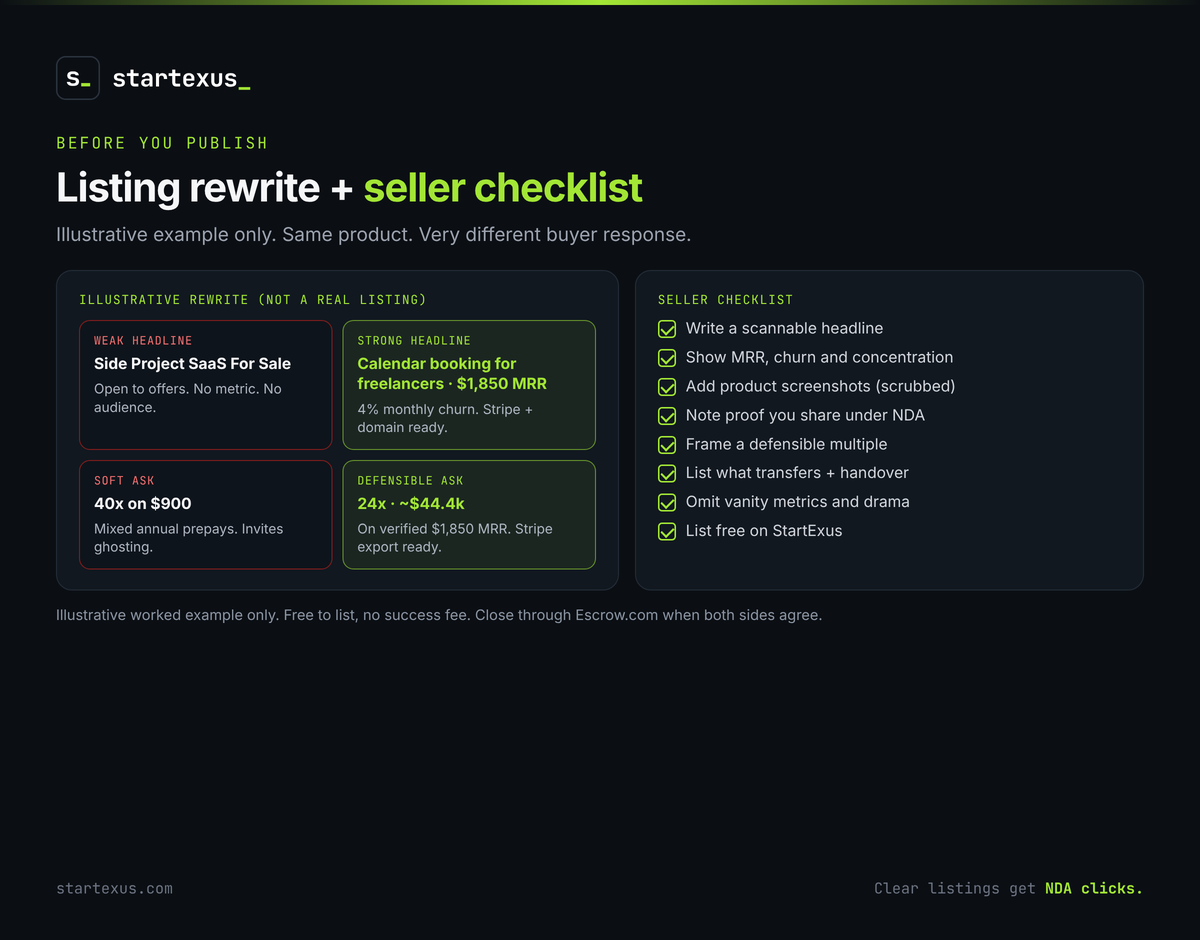
Weak vs strong (illustrative, not a real listing): "Side project SaaS for sale, open to offers" becomes "Invoice reminder SaaS for agencies · $2,400 MRR · 3.5% monthly churn · Stripe + domain transfer ready." Same product. Very different inbox.
2. Show the metrics buyers actually trust
Buyers do not need your full P&L on the public page. They need enough to decide the deal is real.
- MRR and how you define it. Separate true monthly recurring from annual prepays and one-offs. State the last six months, not your best month.
- Churn and concentration. A 4% monthly logo churn and "top customer is 12% of MRR" builds trust. Hiding both creates suspicion.
- Traffic by source. Organic, direct, paid and referral for at least six months. One Product Hunt spike is not a growth story.
- Owner time. Hours per week on support and ops. Buyers are buying their own time back. Be honest.
3. Screenshots and proof that survive diligence
Pretty UI shots are table stakes. Proof is what moves a buyer from "interesting" to "NDA signed."
- Product in use, not just marketing pages. Dashboard with real (or scrubbed) data. Onboarding flow. Billing screen. Mobile if it matters.
- Processor and analytics exports. Offer Stripe (or PayPal) payouts and analytics under NDA. Say that in the listing so buyers know you are ready.
- Transfer checklist preview. List domain, repo, hosting, Stripe, email and docs. Signal that the handover is planned, not improvised.
4. Frame the price so it invites offers
Price is a claim. Defend it with verified numbers and peer context, not sunk cost or hours poured in.
- Anchor on verified MRR or SDE. A flat micro-SaaS often clears in the low-to-mid 20s on verified MRR. Growth, retention and transferability can push higher. Soft numbers cannot.
- Explain the multiple in one line. "24x on trailing six-month average MRR of $1,850" is clearer than "$44,400 OBO."
- Say what is included. Code, domain, Stripe customer list, docs, and a two-week handover. Ambiguity kills momentum.
Worked example (illustrative, not a real listing): a seller wants 40x on $900 "MRR" that mixes two annual prepays. After cleaning to $1,850 true MRR with a Stripe export ready, a 24x ask of about $44,400 reads as serious. The first version invites ghosting. The second invites diligence.
5. What to leave out of the public listing
Not everything belongs on the open page. Oversharing creates noise. Undersharing creates doubt. Aim for clarity with a private follow-up path.
- Omit vanity metrics. Lifetime pageviews, Discord members and "waitlist of 8,000" without conversion rates waste space.
- Omit drama. Do not narrate why you are burned out, mad at a co-founder, or "just need cash this week." Buyers read desperation as risk.
- Omit customer PII. No emails, names or invoices in public screenshots. Scrub first. Share under NDA later.
- Omit secret claim links. Keep claim and verification flows in private channels. Public pages sell the asset, not the admin path.
Your listing checklist before you publish
- Rewrite the headline with job-to-be-done, audience and one hard number.
- State MRR definition, last six months, churn and top-customer share.
- Add product screenshots that show the app working, not only the landing page.
- Note which proof you will share under NDA (Stripe, analytics, repo plan).
- Frame the ask on verified numbers with a one-line multiple explanation.
- List what transfers: domain, code, billing, email, docs and handover window.
- Cut vanity metrics, personal drama and unscrubbed customer data.
- List free on StartExus, get human review, and plan to close through Escrow.com when you agree terms.
The bottom line
A listing that sells your side project is short, concrete and built for a skeptical buyer. Sharp headline. Trusted metrics. Real screenshots. Proof ready under NDA. A price you can defend. Nothing that looks like vanity or panic.
Write it once for the buyer who will open your books. Everything else is noise.
Ready to list? Browse SaaS businesses for sale on StartExus for comps, or list your side project for free: no success fee, human review, and Escrow.com recommended at close.
Tags
- online business
- saas
- ai
- growth