
Selling an online business should not cost you a slice of the sale. Yet many sellers hand over a listing fee, a success fee or a percentage of the price before they have even met a buyer.
It does not have to work that way. A free business listing marketplace lets you list, talk to buyers and close without paying the platform. But free is only useful if the listing still gets seen, trusted and sold.
This is the 7-step plan I would hand a friend who wants to sell with no platform fees. It covers what free should and should not mean, how to build a listing buyers trust and where small costs can still appear. Figures in the examples are illustrative, not market data and not a real listing.
What no fees should actually mean
Before you list anywhere, ask for the full fee picture in writing. Free should cover more than the headline.
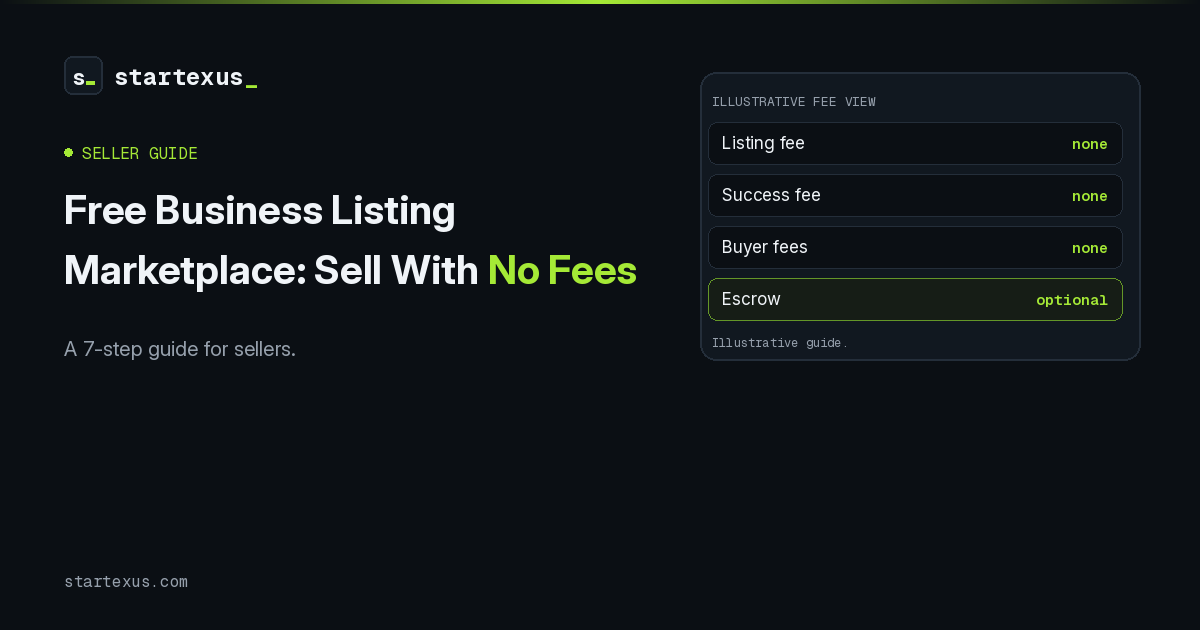
- No listing fee. Creating and publishing the listing costs nothing.
- No success fee. The platform takes no cut when the business sells.
- No buyer fees. Buyers browse, message and make offers freely, so more of them show up.
- Outside costs are separate. If you use an escrow service, it charges its own fee. A lawyer or accountant does too.
Worked example: a $30,000 sale with a 10% success fee costs the seller $3,000. With no success fee, that $3,000 stays with you. Illustrative arithmetic, not a quote from any marketplace.
1. Choose a marketplace that reviews listings
Free can mean anyone posts anything. Buyers know it, and they discount what they cannot trust. Look for a place where a person reads every submission.
- Human review. A person checks that the listing makes sense before it goes live.
- Clear labels. Figures that were checked should look different from figures you reported yourself.
- Private details behind an NDA. The URL, financials and documents should unlock only for buyers who sign.
2. Gather proof before you write a word
A fast review and a faster sale both start with evidence. Collect it first.
- Revenue. Payment processor reports that match what you will claim.
- Traffic. Analytics access or exports that match your numbers.
- Ownership. Proof you control the domain and are who you say you are.
- Costs. Hosting, tools and contractors, so profit is not a guess.
3. Write a plain, honest listing
Lead with what the business does and who pays for it. Then give the numbers. No hype.
- State the basics. Product, customers, monthly revenue, monthly costs and age.
- Explain the price. A short line on how you got there beats a bare number.
- Name the weak spots. Concentrated customers or founder dependence are better said by you than found by them.
4. Price it with room to talk
Free listing does not mean cheap listing. Pick an asking price you can defend and expect a conversation.
- Anchor on a multiple you can explain. Our free valuation tool is a starting point, not a verdict.
- Know your floor. Decide the lowest price you would accept before offers arrive.
- Do not pad for fees. If the platform takes nothing, you do not need to inflate the price to cover it.
5. Be ready for the review and the first questions
Once you submit, a reviewer reads the listing and the proof you provide. Respond quickly if they ask for something.
- Expect a short wait. Review usually takes one to two business days.
- Answer fast. Early replies show buyers you are serious.
- Keep documents ready. Share them with NDA-signed buyers only.
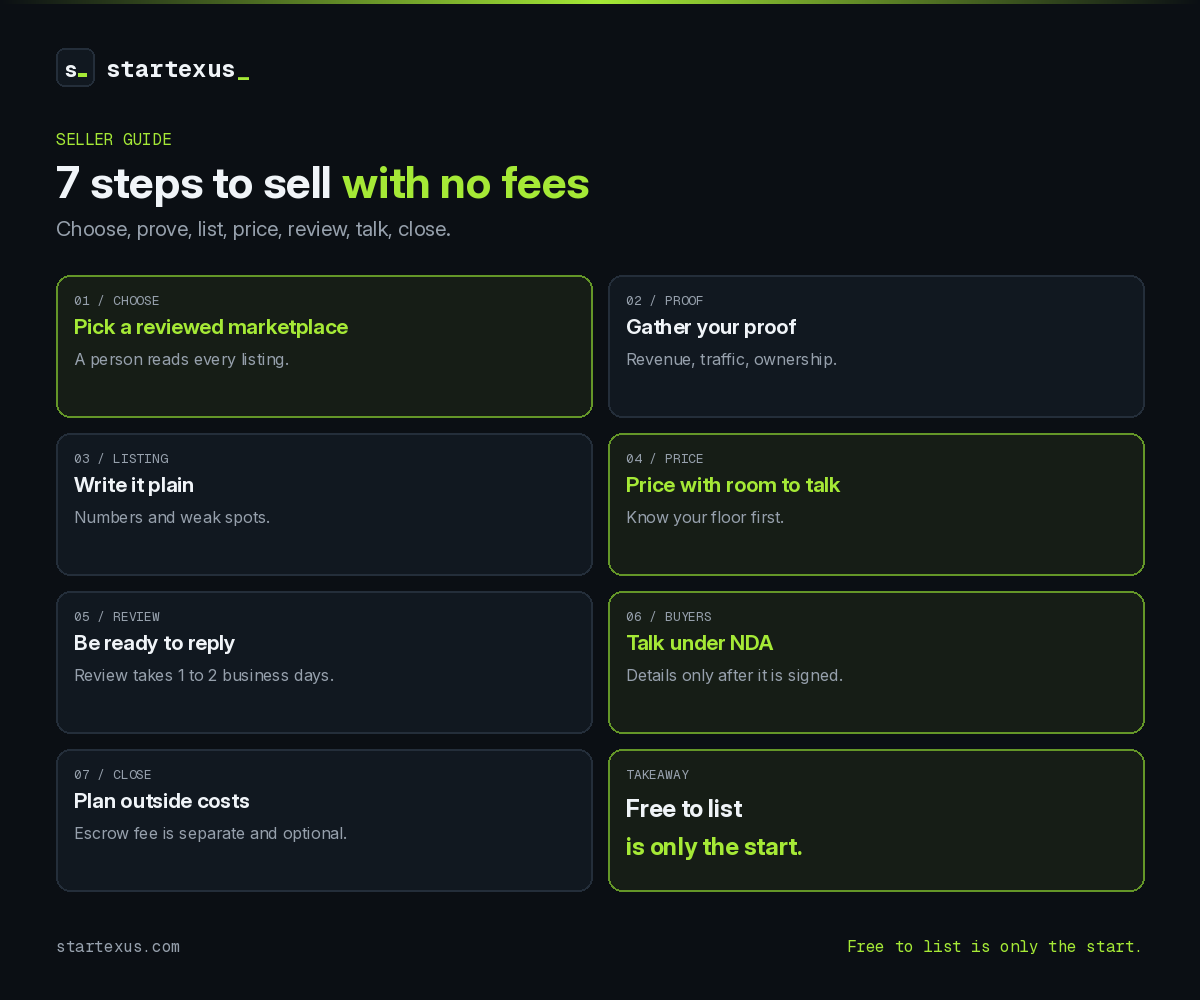
6. Talk to buyers under NDA
Direct conversations are where deals are made. Keep them organised.
- Use the NDA. Share the URL, financials and documents only after it is signed.
- Get on a call. Ten minutes of talking clears up what a dozen messages cannot.
- Weigh offers on more than price. Timing, structure and how serious the buyer is all count.
7. Close and plan for outside costs
The platform may charge nothing, but the closing still has moving parts.
- Consider escrow. It is optional, but it means neither side has to trust the other with the money.
- Know who pays what. Escrow.com charges its own fee. Buyer and seller agree how to split it.
- Follow a transfer checklist. Domain, code, accounts and content move over before funds are released.
Your no-fee selling checklist
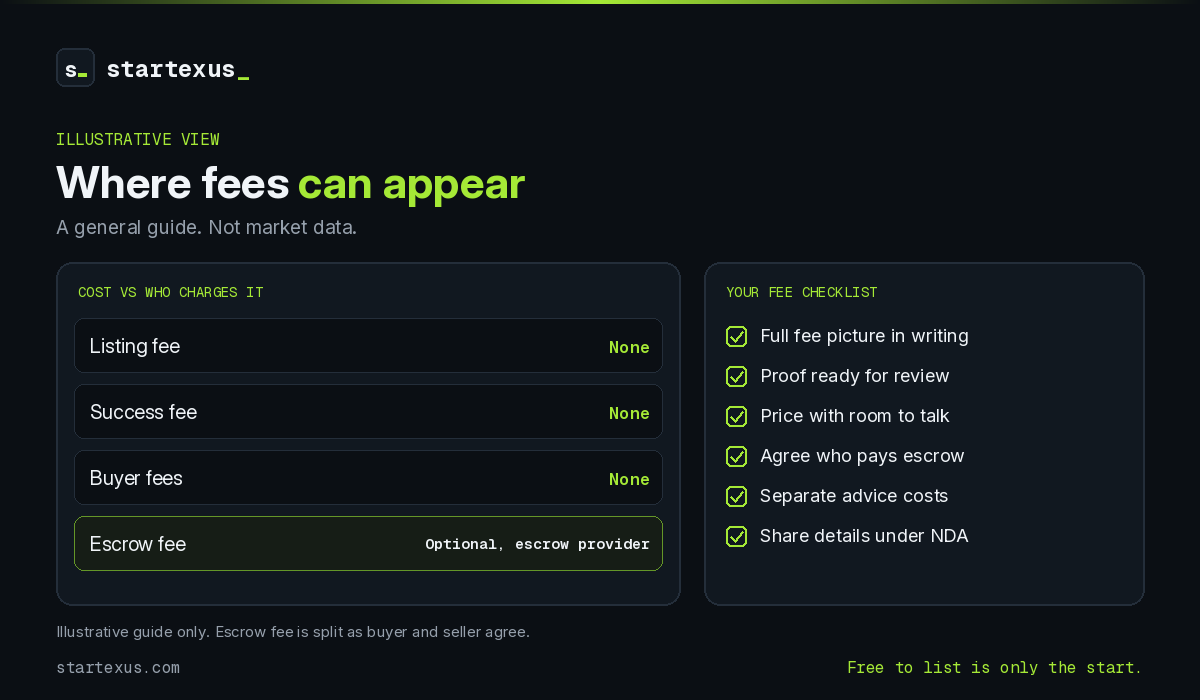
- Ask for the full fee picture in writing.
- Pick a marketplace where a person reviews each listing.
- Gather revenue, traffic and ownership proof.
- Write a plain listing with the numbers and the weak spots.
- Set an asking price and a floor.
- Share details only with NDA-signed buyers.
- Decide up front who pays any escrow fee.
The bottom line
No fees is a good start. It is not the whole job. A listing still has to be trusted, priced well and handled professionally to sell.
Get the proof ready, write it straight and keep what you earn.
Ready to sell? List your business for free on StartExus, where there is no listing fee and no success fee, and we review every listing and label which figures are verified and which are seller-reported. Not sure what it is worth? Try the free valuation tool, or browse current listings to see how others present theirs.
Tags
- online business
- valuation
- ai