
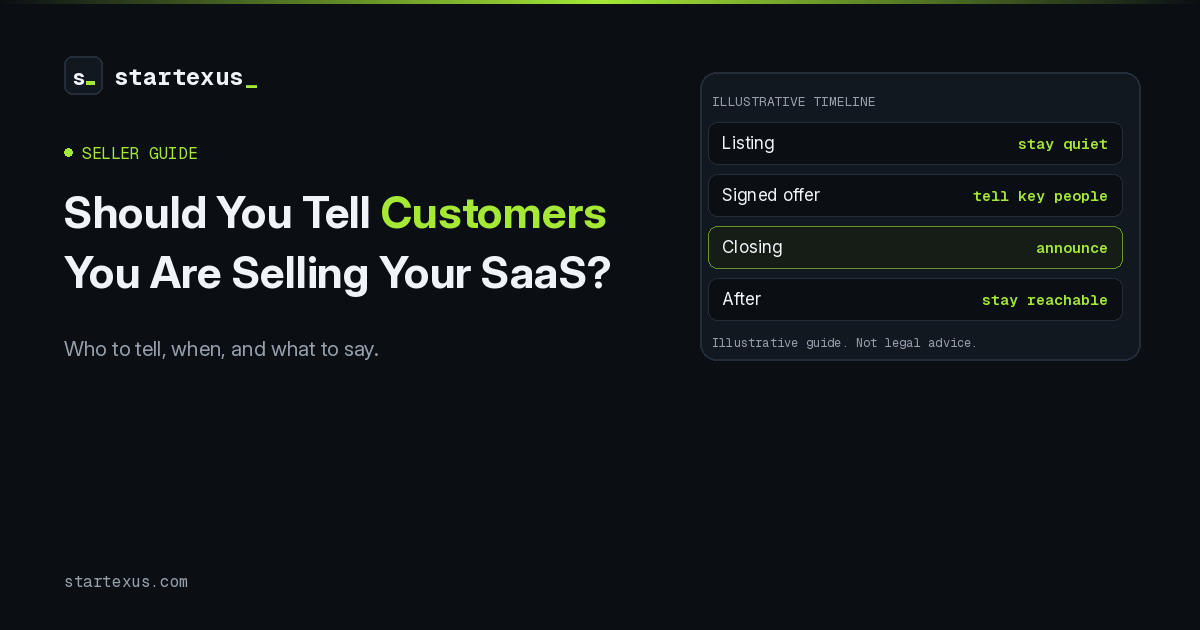
Selling a SaaS is not just a deal with a buyer. It is also a quiet question for every customer you have: who will run this next?
Tell them too early and some leave, or worse, a rumour spreads before you have a buyer. Tell them too late and it feels like a trick. Most sellers either say nothing and hope, or announce everything on day one.
This is the plan I would hand a friend who is about to list. It covers who to tell, when and what to say. Every figure below is an illustrative example, not market data and not a real listing.
Why the timing matters
Customers bought your product, and many trust you personally. A change of owner can look like a risk to them: price rises, support slowing down, features abandoned. Buyers know this too. They will ask how customers were told and whether anyone was surprised. A calm, well-timed announcement protects your MRR and your price.
1. Decide what you are legally and contractually allowed to say
Before you tell anyone anything, check what you have already agreed to.
- Read your terms. Some customer contracts, especially annual or business plans, have clauses about assignment or change of control.
- Check your NDA. If a buyer signed one, the deal details are confidential on both sides.
- Ask a lawyer if unsure. An hour of advice costs far less than a dispute after closing.
2. Say nothing to customers while you are only listing
Listing is not selling. Most listings do not close at the asking price, and some do not close at all. Announcing early creates risk with no upside.
- Keep the listing anonymous. Describe the product by category and numbers, not by name, until a buyer is serious.
- Share details only under NDA. Name, customer list and screenshots come later.
- Keep running the business normally. Same support speed, same releases, same tone.
Test question: if this deal fell through tomorrow, would my announcement have helped or hurt? If it would have hurt, it is too early.
3. Tell key people once you have a signed offer
When an offer is signed, a small circle may need to know first. These are people who touch the business every day.
- Freelancers and contractors. They have access and context the buyer may want to keep.
- A few trusted, larger customers. A short personal note beats a broadcast email.
- Anyone the buyer asks you to introduce. Do it with the buyer's agreement, not behind their back.
4. Agree the announcement with the buyer
The message should come from both of you, or at least be approved by both. Put the plan in writing before closing.
- Agree the date. Usually on or just after closing, not before funds have cleared.
- Agree the wording. One short email, reviewed by both sides.
- Agree who answers replies. Expect questions in the first 48 hours and decide who handles them.
5. Write a short, honest message
Customers want three things: what is changing, what is not, and who to contact. Keep it to a few lines.
- Lead with continuity. Same product, same price, same support address.
- Introduce the new owner in two lines. Who they are and why they bought it.
- Do not oversell. No roadmap promises you cannot keep. Do not spin it as bigger news than it is.
- Say thank you. Briefly, and mean it.
6. Handle the replies
Some customers will write back. Most will not care. A few will ask hard questions.
- Answer within a day. Fast replies signal that nothing is falling apart.
- Be straight on price and data. If you do not know, say so and promise an answer.
- Offer help with cancellations. Letting someone leave gracefully is better than an argument.
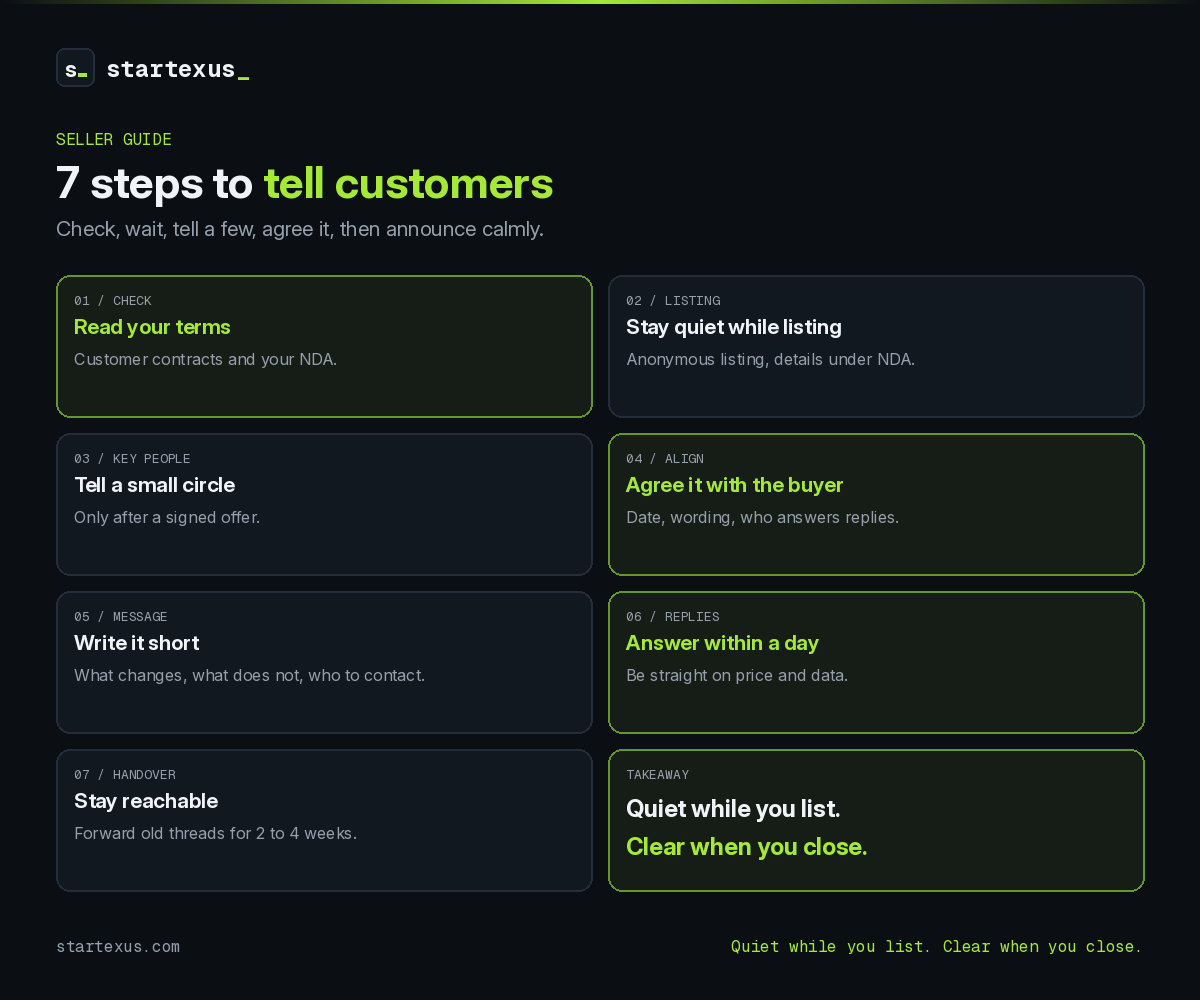
7. Stay reachable through the handover window
Your last job is not done at closing. For the agreed handover window, usually two to four weeks, stay available to the buyer and to customers who still ask for you.
- Forward support questions. Do not answer old threads from your old address for months.
- Point to the new owner. A short, friendly redirect keeps trust.
- Close your own loops. Update your site, profile and email signature when it is agreed.
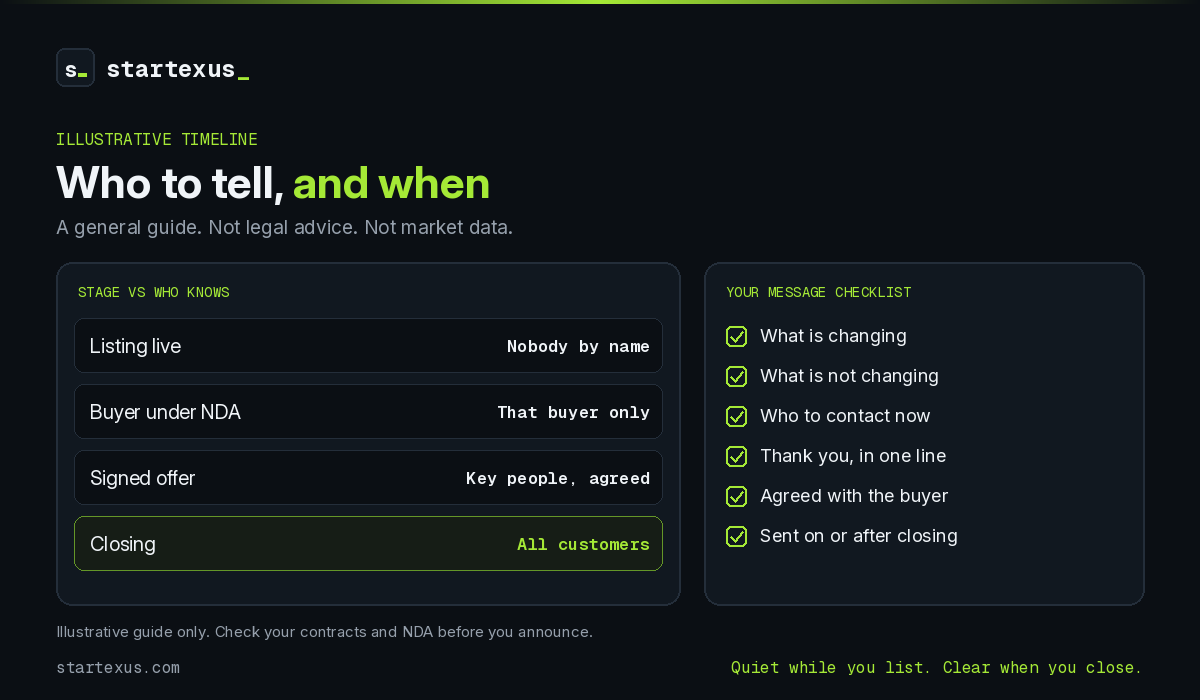
Your announcement checklist
- Read your customer terms and your NDA.
- Keep the listing anonymous while you look for a buyer.
- Tell key people only after a signed offer.
- Agree date, wording and reply owner with the buyer.
- Send one short message: what changes, what does not, who to contact.
- Reply to every question within a day.
- Stay reachable for the whole handover window.
The bottom line
You do not owe customers a running commentary on your exit. You owe them honesty, notice that fits the deal and a smooth handoff. Quiet while you list, clear when you close.
Do that and customers stay, buyers trust you and the price you negotiated holds.
Ready to sell? List your business for free on StartExus, where we review every listing and label which figures are verified and which are seller-reported. Not sure what it is worth? Try the free valuation tool, or browse current listings to see how others present theirs.
Tags
- valuation
- saas
- ai
- exit strategy