
Listing your business is the easy part. The hard part starts when a real buyer writes back with twelve questions and a call request.
How you handle that first week decides whether the buyer keeps going or quietly disappears. Slow, vague or defensive answers kill deals. Fast, specific and documented answers build them.
This is the process I would hand a friend who is about to talk to buyers for the first time. Every figure below is an illustrative example, not market data and not a real listing.
Why buyer conversations decide the deal
A buyer cannot see inside your business. All they have is your listing, your documents and how you respond. Your replies are the product demo for you as a seller. If you are easy to deal with now, the buyer assumes the handover will be easy too.
1. Reply fast, even if the answer is "later"
Silence reads as hiding something. You do not need every answer on day one. You need to acknowledge the message and say when the answer is coming.
- Acknowledge within a day. One short line is enough: "Got it, I will send the churn numbers tomorrow."
- Give a real deadline. "Tomorrow" or "Thursday" beats "soon".
- Keep it in one thread. Message the buyer on the platform so the history stays in one place.
2. Know what stays private until the NDA
On StartExus, buyers sign the NDA with one click to unlock the URL, financials and documents. You stay in control of who sees what. Decide in advance what you will share and when.
- Before the NDA. Stick to what is already on the listing: the model, the general shape of the numbers, why you are selling.
- After the NDA. Share the documents the buyer needs: revenue exports, customer counts, costs and handover notes.
- Never share credentials. Screenshots and read-only exports are enough at this stage. Logins move at the close, not before.
3. Answer with documents, not claims
"Revenue is stable" is a claim. A payment processor export is evidence. Buyers trust the second and discount the first.
- Match your listing. Anything the buyer sees in a document should agree with the listing. If a figure is seller-reported, say so plainly. StartExus labels what is verified and what is seller-reported, and buyers can tell the difference.
- Show the source. Name where each number comes from: the payment processor, the analytics account, the bank.
- Give the bad news yourself. A churn spike or a slow quarter is easier to explain up front than to explain after the buyer finds it.
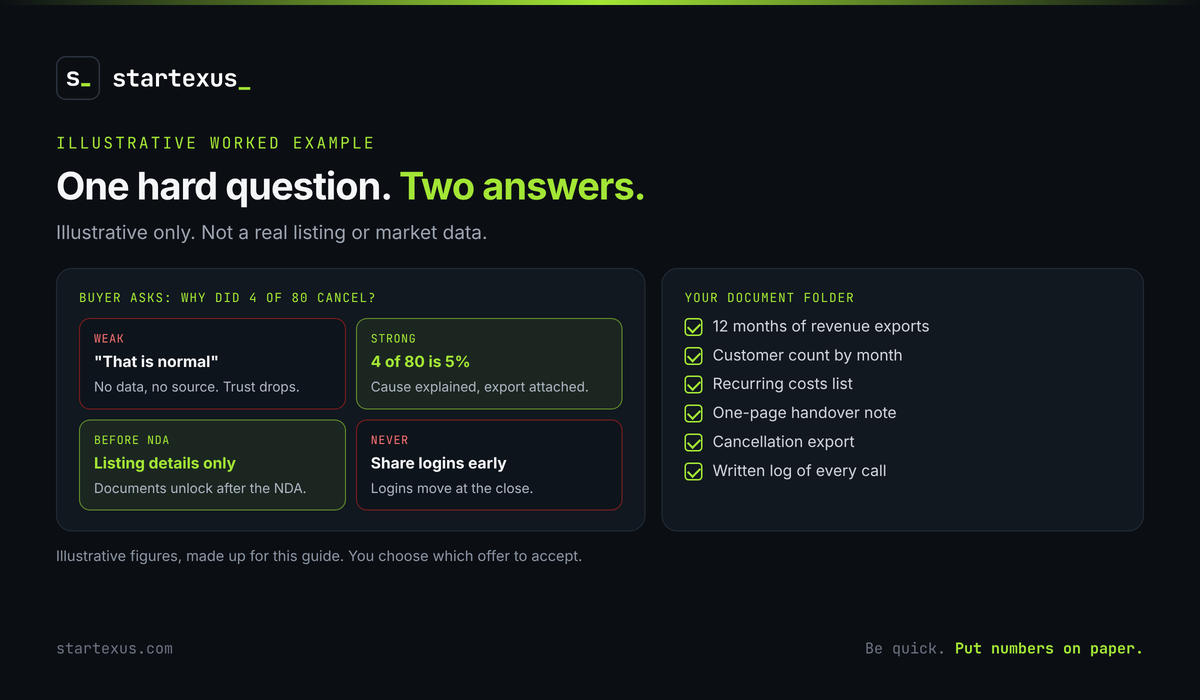
Pro tip: keep one folder with your last 12 months of revenue exports, a customer count by month, a list of recurring costs and a one-page handover note. Most first questions can be answered from those four items.
4. Run the first call with a plan
A call is where a buyer decides whether they like working with you. Prepare for it like a short meeting, not a chat.
- Open with the story. Why you built it, who uses it, why you are selling. Two minutes, not twenty.
- Let the buyer lead. Their questions tell you what worries them. Note each one.
- Do not improvise numbers. If you do not know a figure, say you will check and send it in writing after the call.
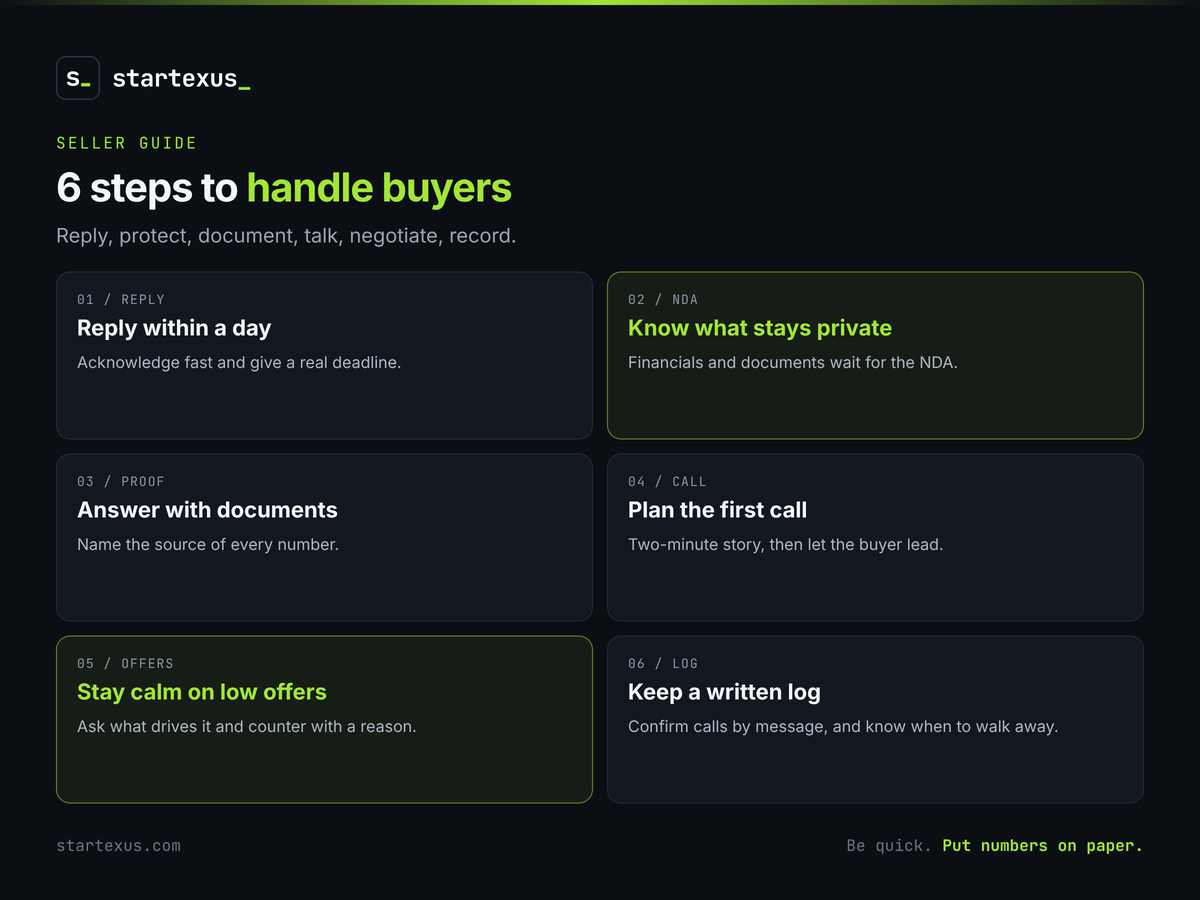
5. Handle low offers and awkward questions calmly
Some buyers will test you. A low offer is not an insult. It is an opening position.
- Do not reply in anger. Wait a few hours. Then answer the number, not the tone.
- Ask what drives the offer. If it rests on a concern, such as churn or founder dependence, you may be able to answer it with data.
- Counter with a reason. A counter tied to a document is stronger than a counter tied to a feeling.
- Decide who gets which answer. You choose which offer to accept. You are never obliged to take the first one.
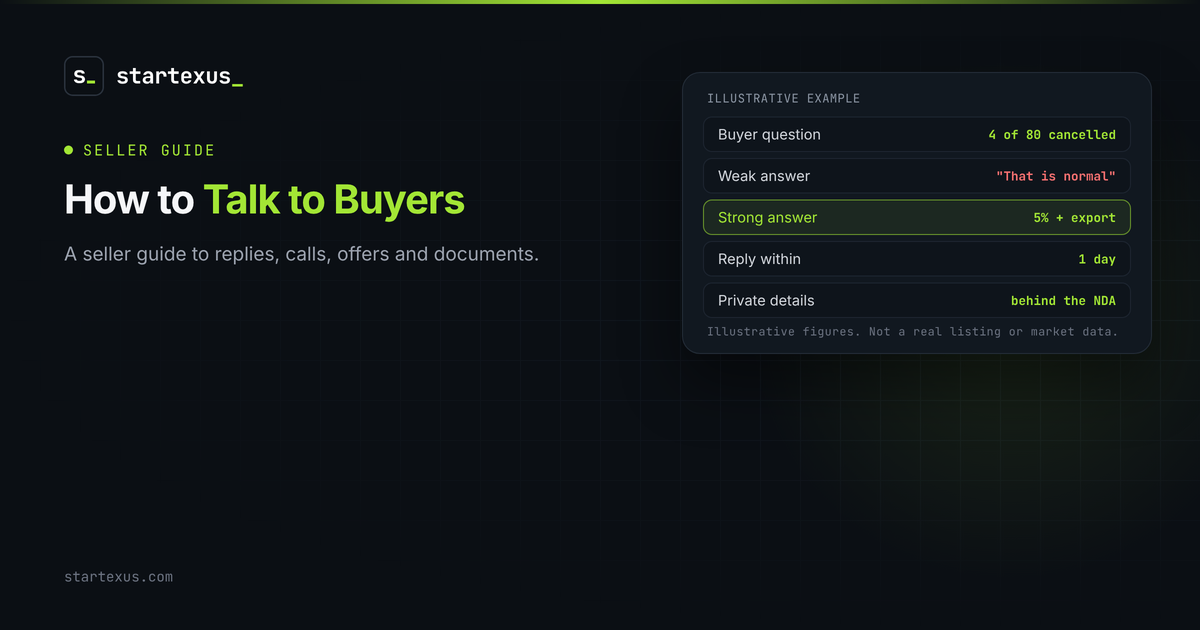
Worked example (illustrative): a buyer asks why 4 of your 80 customers cancelled last month. A weak answer: "That is normal." A strong answer: "4 of 80 is 5 percent. Three were on the monthly plan and left after a price change in March. Here is the cancellation export." Same facts, very different trust. Figures are made up for illustration.
6. Keep a written log
Deals move across days and weeks. Memory slips. A short log protects both sides.
- Record what you promised. Documents, dates and any verbal answers you gave.
- Confirm calls by message. Send two lines after each call: what was discussed and what happens next.
- Track each buyer separately. If more than one buyer is talking to you, keep their questions, documents and offers apart.
7. Know when to stop answering
Not every buyer is serious. Reasonable questions get full answers. Repeated requests for the same material, or demands for logins before any offer, are a signal.
- Look for movement. Serious buyers narrow their questions over time. Tire kickers widen them.
- Ask where they are in their process. Funding, timeline and experience tell you a lot.
- Protect the business. Do not hand over customer data or code to someone who has not made an offer.
Your buyer conversation checklist
- Reply within a day and give a deadline for anything you cannot answer yet.
- Decide what stays private until the buyer signs the NDA.
- Answer with documents and name the source of every number.
- Prepare a two-minute story for the first call and let the buyer lead.
- Stay calm on low offers and counter with a reason.
- Keep a written log and confirm each call by message.
- Stop sharing when questions go in circles or logins are requested too early.
The bottom line
Buyers are not only judging your business. They are judging you. Be quick, be specific and put numbers on paper.
Do that and you turn a stranger into a buyer who trusts the handover before it starts. Skip it and even a good business can lose the deal.
Ready to talk to buyers? List your business for free on StartExus, where we review every listing and you stay in control of who sees what. Buying instead? Browse current listings, or try the free valuation tool first.
Tags
- online business
- valuation
- ai