
The best micro-SaaS deals are rarely the cheapest ones. They are the ones where the price, the numbers and the work all make sense together. Cheap and broken is not a deal. It is a project.
Finding those deals is less about luck and more about routine. You need to know where sellers show up, how to filter fast and what to check before you get attached.
This is the routine I would hand a friend looking for a micro-SaaS for sale in 2026. Any figures in the examples are illustrative, not market data and not a real listing.
What a good deal actually looks like
Before you look anywhere, decide what you are looking for. Otherwise every listing looks interesting for ten minutes.
- A price that matches the numbers. The asking price makes sense against revenue and profit you can confirm.
- Revenue you can check. Payment processor data beats a screenshot.
- Work you can handle. The weekly hours fit the time you actually have.
- A clean handover. Code, domain and accounts can move to you without drama.
1. Start with marketplaces that review listings
Marketplaces are the obvious place to start because sellers there want to sell. The useful question is how much checking happens before a listing goes live.
- Look for reviewed listings. A person reading each listing filters out a lot of noise.
- Look for visible checks. Domain, revenue and traffic checks tell you what has been confirmed and what is seller-reported.
- Look at fees on both sides. Buyer fees add to your real cost, so know them before you offer.
- Use filters and saved searches. Filter by type, price and revenue stage, and get alerts instead of checking every day.
2. Watch founder communities and social posts
Many small products are sold by founders who simply post that they want out. These posts can be early, informal and less competitive.
- Read build-in-public posts. Founders who share revenue often mention when they are ready to move on.
- Search for plain phrases. "Selling my SaaS" or "looking for a buyer" finds more than formal listings.
- Expect less structure. There is no review, so you do all the checking yourself.
3. Reach out to founders directly
Some of the best deals are not listed at all. A polite, specific message to a founder can open a conversation nobody else is having.
- Pick products you already understand. Your knowledge of the niche is your edge.
- Look for signs of a tired owner. A product that still works but has not shipped updates in a while is a candidate.
- Be clear and respectful. Say who you are, why you like the product and that there is no pressure.
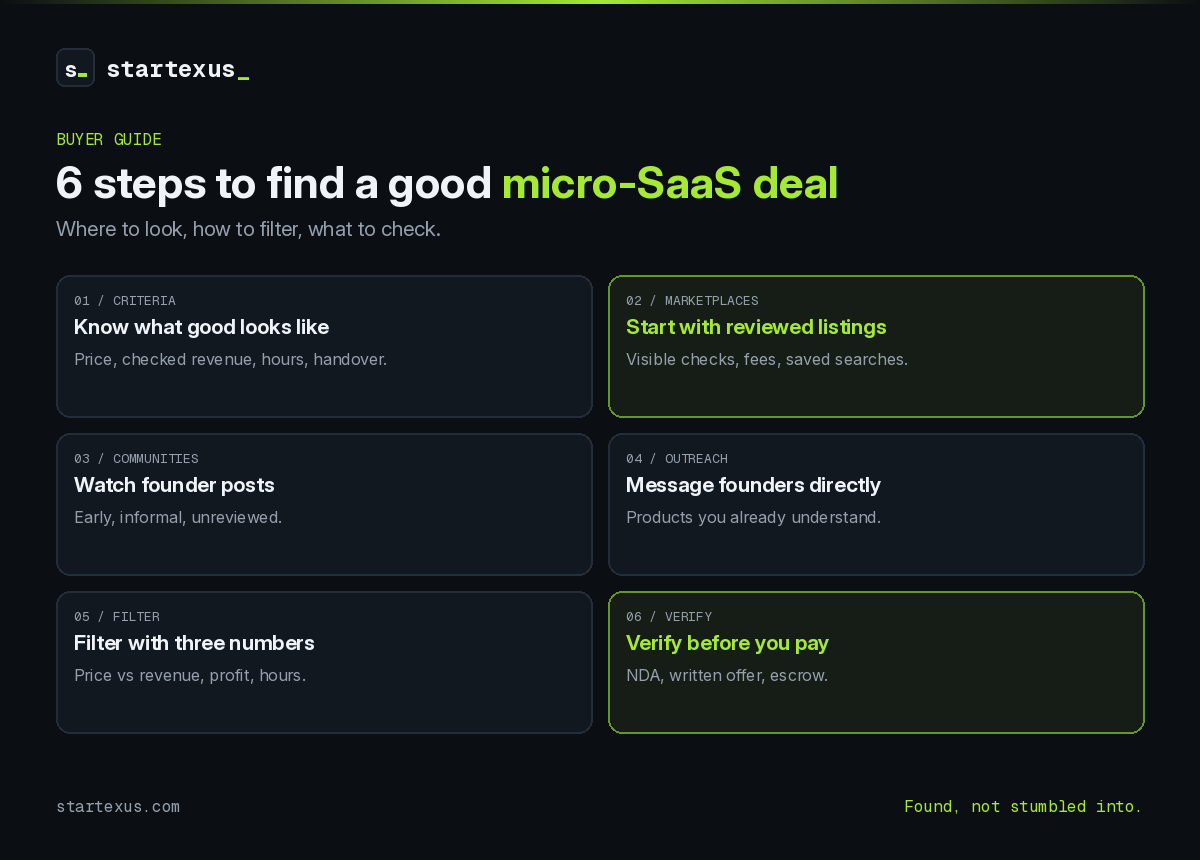
4. Filter fast with three numbers
You will see far more listings than you can study. Three quick numbers tell you which ones deserve an hour.
- Asking price against yearly revenue. A quick ratio shows if the price is in a sensible range for the business.
- Profit, not just revenue. High revenue with thin margins is a different business.
- Owner hours per week. This is the job you are buying along with the asset.
Worked example: a product asking $12,000 with $500 a month in revenue costs 2x its yearly revenue ($6,000). That is a starting point for questions, not a verdict. Illustrative numbers.
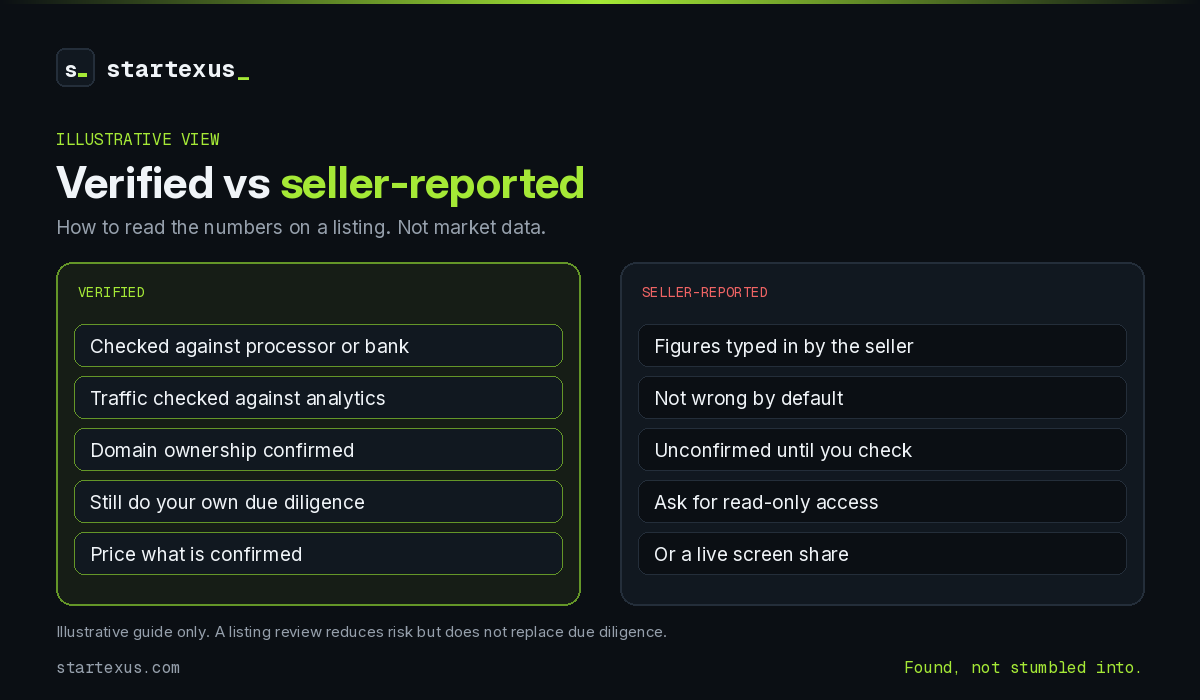
5. Tell verified numbers from seller-reported ones
Two listings with the same revenue can carry very different risk. The difference is whether anyone has checked.
- Verified. Figures compared with processor or bank records, or analytics, by a third party.
- Seller-reported. Figures typed in by the seller. Not wrong by default, but unconfirmed.
- Your own check. Ask for read-only access or a live screen share either way. A review reduces risk. It does not replace your due diligence.
6. Move quickly, but verify before you pay
Good small deals do not sit for long. Speed matters, but only up to the point where money moves.
- Message the seller early. Ask about churn, costs and why they are selling.
- Sign an NDA when asked. It is normal for sensitive details like the product name or full revenue data.
- Make a clear offer. Price, terms and handover in writing. Negotiating below the asking price is normal.
- Use escrow. Your money is held until the transfer is confirmed.
Your 20-minute deal-hunting routine
- Write down your budget, niche and weekly hours.
- Check saved searches on reviewed marketplaces.
- Scan founder communities for sale posts.
- Note one product worth a direct message.
- Filter by price against revenue, profit and hours.
- Separate verified from seller-reported numbers.
- Message the sellers of your top one or two.
The bottom line
Good micro-SaaS deals are found, not stumbled into. Look in a few places on a steady routine, filter hard and trust only what you can confirm.
The cheapest listing is rarely the best one. The one you can verify usually is.
Ready to look? Browse SaaS for sale on StartExus, where a person reviews every listing before it goes live, each listing shows its domain, revenue and traffic checks, and buyers pay no fees. Selling instead? List your business for free, with no listing fee and no success fee, or get a free valuation range first.
Tags
- due diligence
- valuation
- saas
- ai